


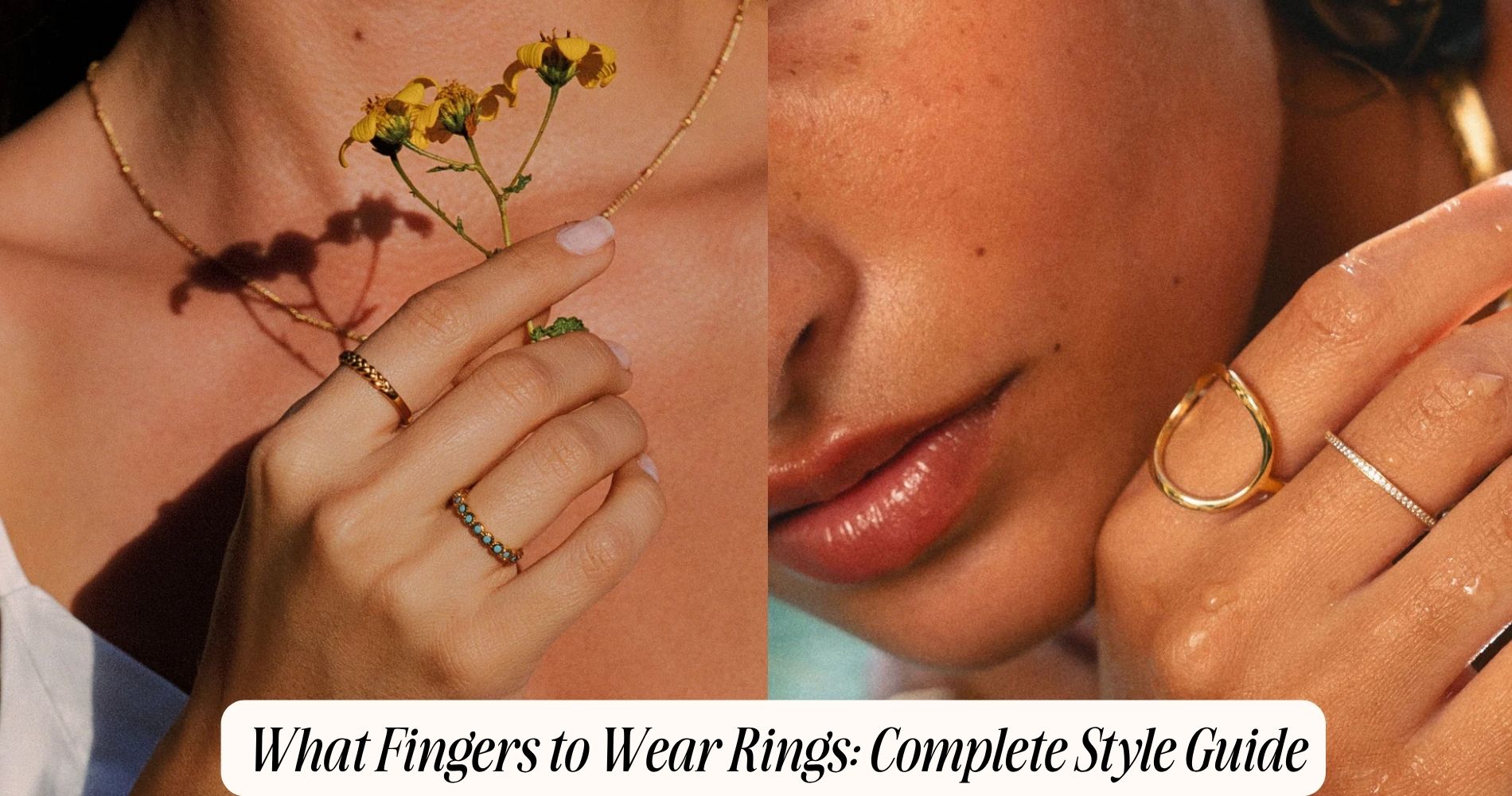
What Fingers to Wear Rings: Complete Style Guide
Most ring styling advice stops at symbolism — the ring finger means commitment, the pinky means personality, and so on. But what fingers to wear rings on is really a question of proportion, balance, and how your hands look and feel through an entire day. Placement affects whether a stack reads as intentional or chaotic, whether a single ring anchors a look or gets lost, and whether your rings stay comfortable from morning through a gym session or a swim. The Minimalist Gold Rings collection is a practical starting point if you're building a ring wardrobe from scratch. This guide covers every finger, the logic behind placement, how to stack across multiple fingers, and what to consider when your rings need to hold up to real daily life.
What Fingers to Wear Rings On: A Finger-by-Finger Breakdown
Each finger has a different visual weight, movement pattern, and cultural association. Understanding all five helps you make placement decisions with intention rather than guesswork.
| Finger | Visual Role | Ring Style That Works | Common Placement Logic |
|---|---|---|---|
| Thumb | Bold accent, isolated | Wide band, sculptural | Statement without crowding other fingers |
| Index | Directional, dominant | Signet, bold solitaire | Command and confidence |
| Middle | Largest, central | Mid-weight band, stacking | Symmetry and balance |
| Ring | Commitment, tradition | Band, solitaire, stacking | Left for commitment; right for fashion |
| Pinky | Delicate, expressive | Slim band, midi | Personality accent |
- Thumb: A ring here reads immediately because the thumb moves independently from the other fingers. It doesn't compete with rings on adjacent fingers, which makes it a natural anchor for a wide band or a more sculptural piece. Slim bands can work on the thumb too, but they tend to look proportionally small — the thumb generally carries more visual weight than the other fingers.
- Index finger: This is the most active finger in everyday movement, which means a ring here is always visible. It suits a bolder silhouette — a signet shape, a geometric band, or a single stone set low enough not to catch on things. If you wear a ring on your index finger, keep the middle finger clear or use only a very slim band there to avoid the two fingers looking cluttered.
- Middle finger: The longest finger and the one closest to visual center. A mid-weight ring here sits with a sense of balance rather than asymmetry. It's also the easiest finger to stack on, because it has enough length to carry two or three rings without the stack sliding off the top.
- Ring finger: Left hand carries the strongest cultural association with engagement and marriage in most Western countries. Right hand ring finger is essentially free for any style — a deliberate fashion ring, a birthstone piece, or part of a stacking combination. Neither choice requires explanation.
- Pinky: A slim band or midi ring on the pinky adds a finishing detail without competing with rings on the other fingers. It's the punctuation mark of a ring combination — easy to overlook but noticeable when it's well-chosen. Avoid anything wide or heavy here; the proportions rarely work.

The Logic Behind Left Hand vs. Right Hand
There's no rule that forces rings onto a particular hand, but there is a logic worth understanding before you decide. The left hand ring finger carries the clearest cultural signal: in most of the US, UK, and Australia, it reads as commitment. If you wear a ring there that isn't a wedding band or engagement ring, some people will register it as one. That's not a reason to avoid it — just worth knowing.
The right hand operates with much less cultural baggage, which gives you more stylistic freedom. A ring stack on the right index and middle fingers reads as a deliberate fashion choice. A single statement ring on the right ring finger carries no particular meaning beyond the ring itself.
Dominant vs. non-dominant hand is a practical consideration that rarely comes up in ring guides. A ring on your dominant hand will make contact with surfaces, keyboards, and other objects far more often than one on your passive hand. That means it will show wear faster — especially true for gold-plated metals that rely on a thin surface finish. If longevity matters, choosing rings made from PVD-coated stainless steel for your dominant hand makes the difference: the coating bonds at the molecular level and doesn't grind away from regular contact the way standard plating does.
How to Stack Rings Across Multiple Fingers
Stacking on a single finger gets most of the attention, but distributing rings across multiple fingers is where the real visual decisions happen. The basic principle is visual balance — not symmetry, but weight distribution that feels considered rather than random.
A few frameworks that work consistently:
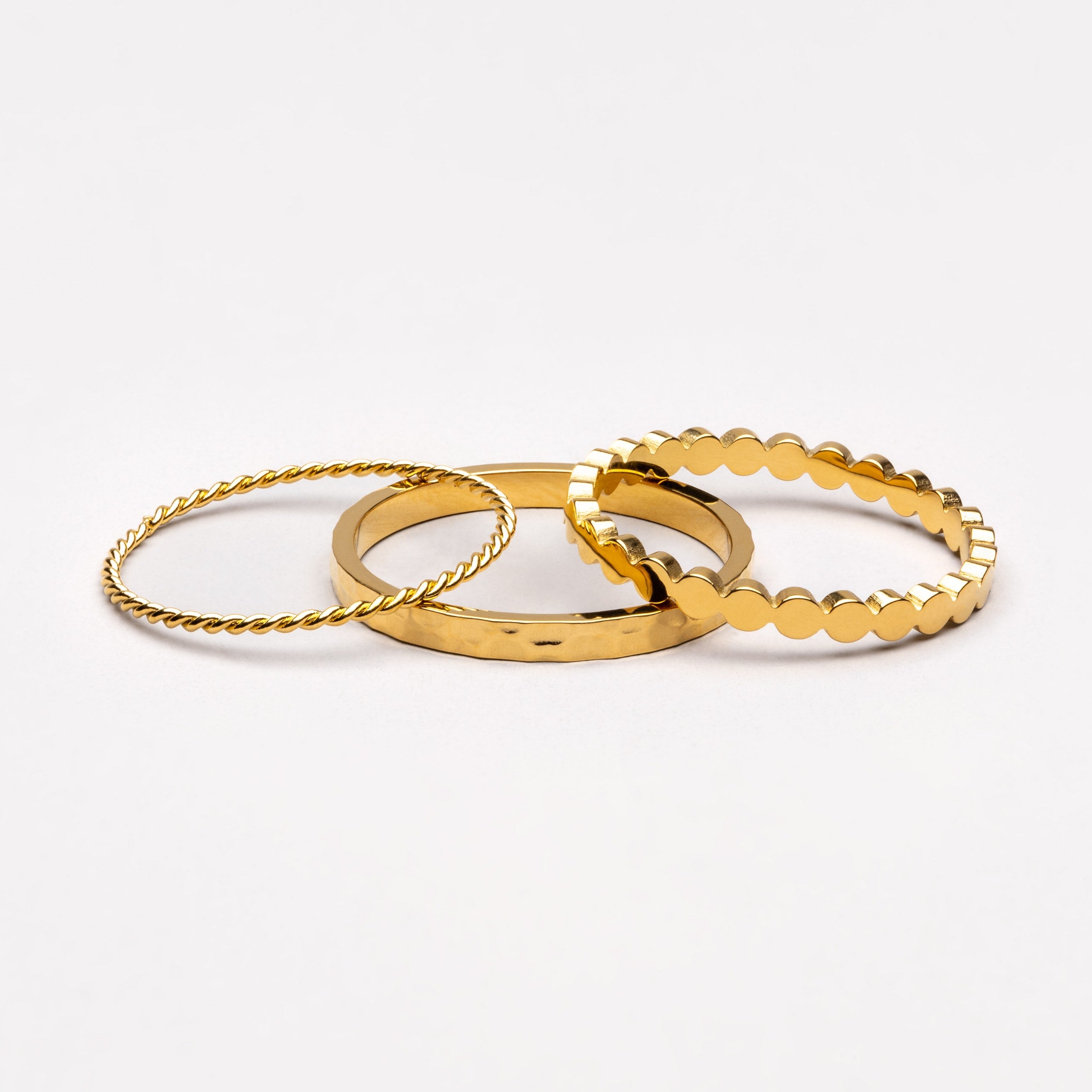
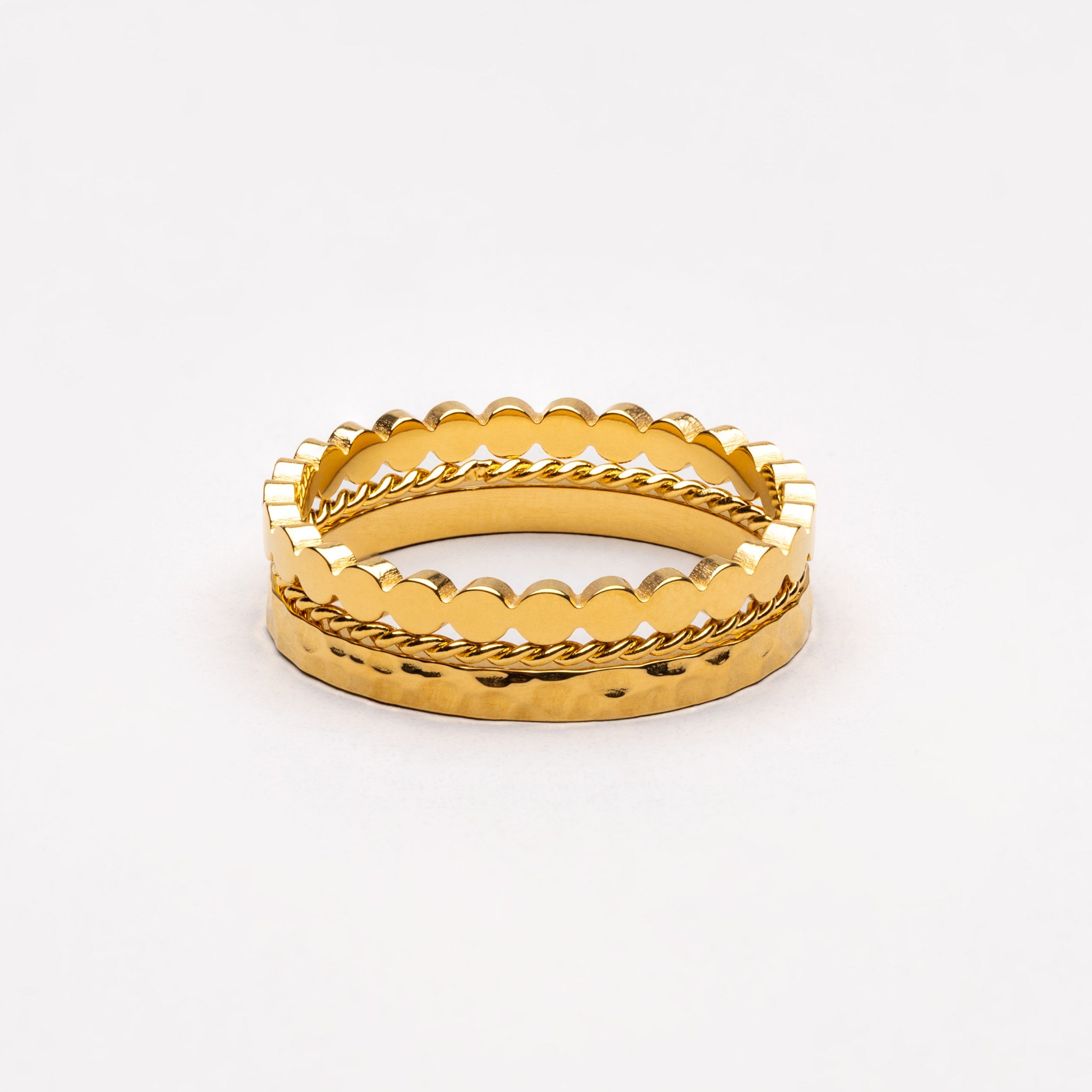
- The anchor and accent approach: Choose one ring as the dominant piece — a wider band, a stone-set ring, or anything with more surface area — and pair it with one or two thinner bands on adjacent fingers. The dominant ring anchors the look; the thinner bands build around it without competing.
- The graduated stack: Wear slightly more substantial rings toward the center of your hand (middle and ring fingers) and thinner or shorter rings toward the edges (index and pinky). This creates a natural visual curve that reads as intentional rather than accumulated.
- One hand heavy, one hand clear: If you're wearing three or more rings, concentrating them on one hand and leaving the other mostly bare keeps the look from feeling overloaded. A single ring or a watch on the clear hand provides balance without mirroring.
What to avoid: rings of identical width on adjacent fingers tend to blur together into a single visual block. Varying the band widths — even slightly — creates the separation that makes individual rings readable.

Ring Proportions and Wrist Size
The relationship between ring width and finger size is straightforward: wider bands look proportional on longer or wider fingers and can overwhelm shorter or slimmer ones. A 6mm band that reads as a bold statement ring on a longer finger can look like a chunk of metal on a shorter one.
Midi rings — worn above the knuckle — are a separate category worth understanding. They sit on the thinner upper section of the finger and need to be sized accordingly: a midi ring sized for the base of the finger will slide around and sit awkwardly. When worn correctly, they add a layer of detail to a ring combination without requiring another full-size ring.
For active lifestyles, ring profile matters as much as width. A low-profile band — one where the metal sits flush or close to flush with the finger — is far more practical for gym workouts, pilates sessions, or any activity where your hands are in motion. High-set stones and elaborate settings catch on fabric and equipment in ways that become genuinely inconvenient, and some settings can bend under pressure in ways that damage the stone seat.
Choosing Rings That Hold Up to How You Actually Live
The way most ring guides end — with a vague mention of cleaning your rings regularly — understates how much material choice affects real-world wearability. Standard gold-plated rings use a thin layer of gold over a brass or copper base. That layer wears through at contact points: the inner band where it presses against the finger, and the sides where adjacent rings or surfaces rub. The timeline varies, but six months to a year of daily wear is often enough to see the base metal showing through.

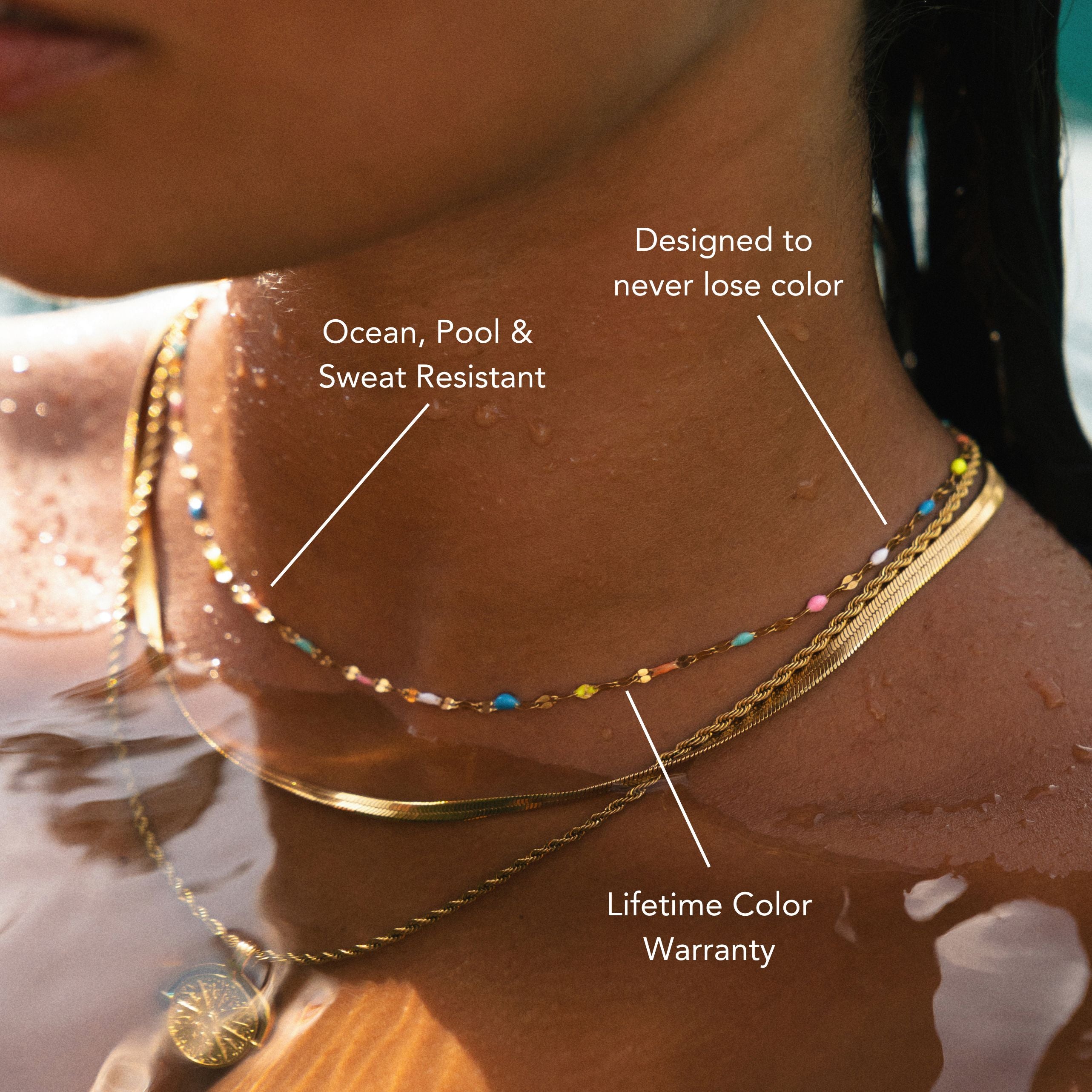
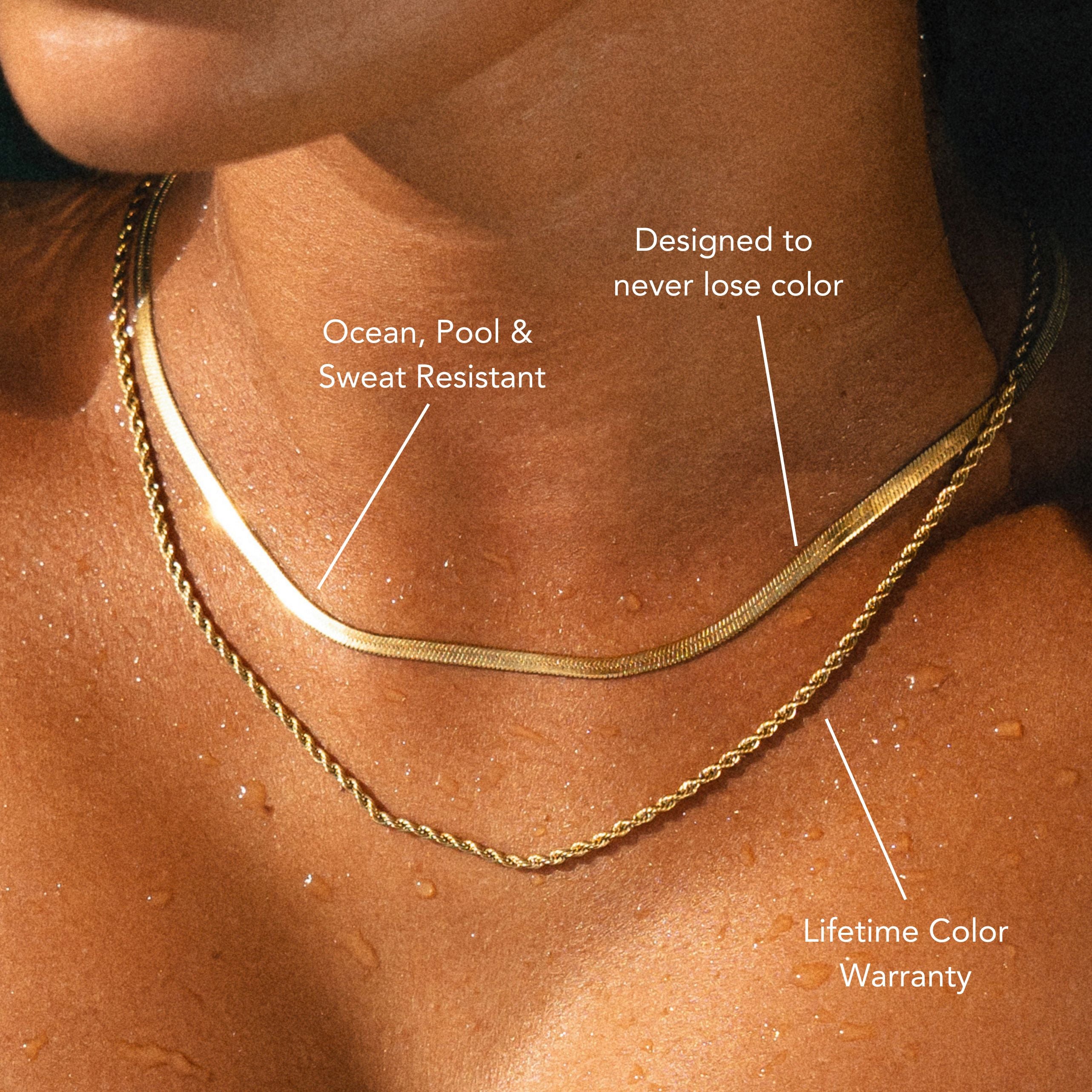
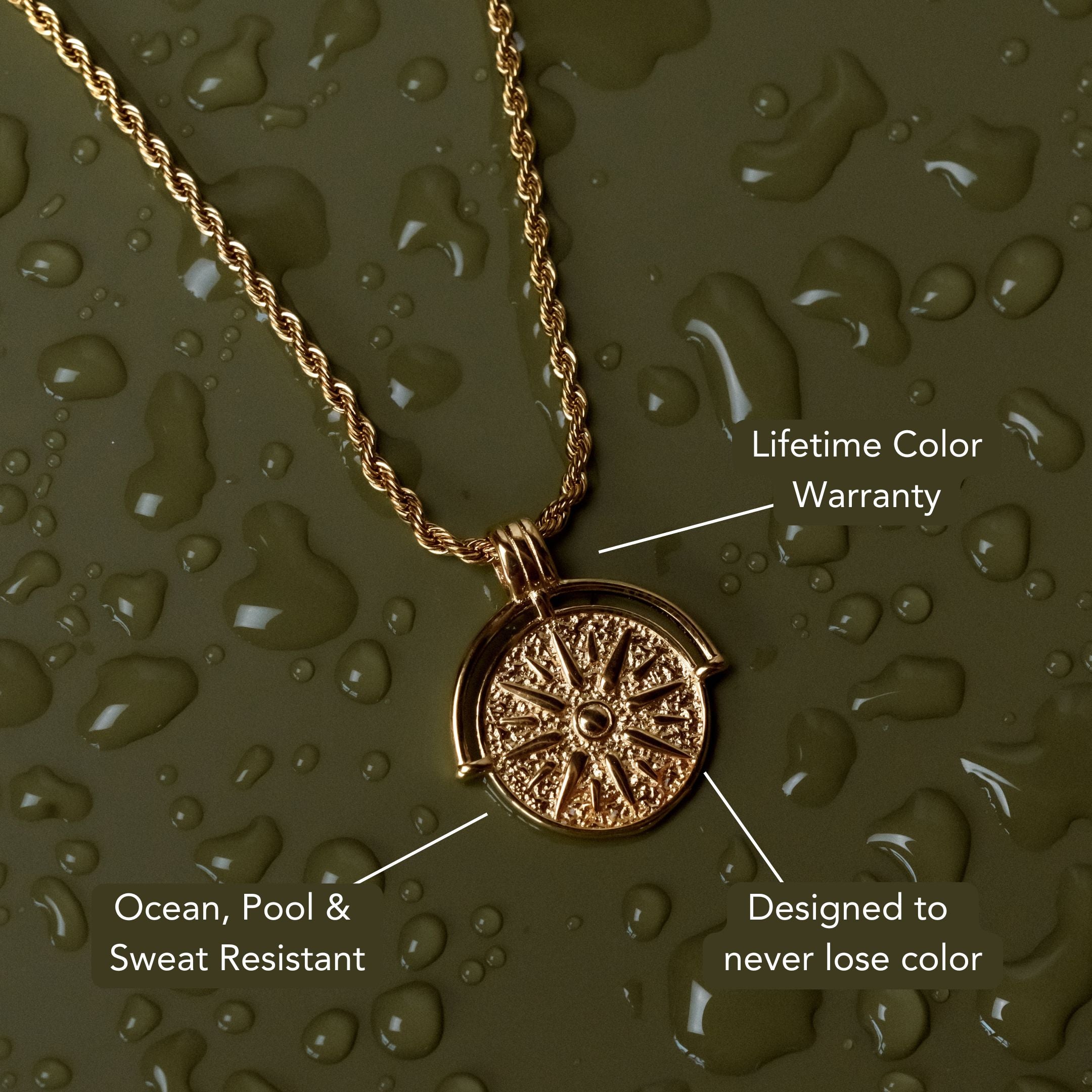
PVD (Physical Vapor Deposition) coating produces a finish 10× thicker than standard gold plating by bonding the gold layer to a stainless steel base at the molecular level. The result resists the friction of daily wear, doesn't react with sweat or moisture, and stays consistent across contact points. If you wear your rings through workouts, in the shower, or at the beach — rather than taking them off before any activity that might stress the metal — the material you choose determines whether your rings look the same on day 300 as they did on day one.
ATOLEA's stainless steel rings come with a lifetime color warranty, which is simply the brand's commitment that the PVD finish will hold. It removes the mental overhead of treating your rings as something fragile and rearranges the question from how to protect your jewelry to how to wear it.
Frequently Asked Questions
What fingers should I wear rings on if I'm just starting out?
Start with the ring finger on your right hand and the middle finger on either hand — both are forgiving placements that read as intentional without requiring a full stack. A slim band on one finger is enough to see how a ring feels during daily wear before adding more. The index finger is the most active, so leave it for when you're ready for a ring you'll consciously notice.
What fingers to wear rings on for a stacked look?
The middle and ring fingers on the same hand are the most natural starting point for a stack. Middle finger carries visual weight without cultural association; ring finger adds a second layer without the combination looking crowded. Add a slim band on the index or pinky once you're comfortable with the base combination.
Does it matter which hand I wear my rings on?
Practically, yes. The left ring finger carries a strong cultural signal in most Western countries — rings there read as commitment to many people. The right hand is open for fashion choices without that association. Your dominant hand sees more contact and friction, which affects how quickly a ring's finish wears — especially relevant for gold-plated pieces.
Can I wear rings on every finger?
You can, but the result depends entirely on execution. Rings on every finger tend to work when there's a consistent thread — all slim bands, all the same metal, or a very deliberate mix — and rarely works when pieces are unrelated in scale and finish. If you're building toward a full-hand look, start with one ring per hand and add one finger at a time until the balance feels right.
What ring styles work best on the pinky finger?
Slim bands, midi-style rings, and any ring with a narrow profile. The pinky is the smallest finger, and rings wider than about 4–5mm tend to look disproportionately heavy there. A single slim gold band on the pinky reads as a deliberate finishing detail rather than an afterthought.
Do my rings need to match across fingers?
No, but they need to relate. Mixing metals works when proportions differ — a gold band and a silver band of the same width on adjacent fingers will compete; a wide gold band and a thin silver one will not. Mixing finishes (polished and matte) on the same metal creates texture without confusion. The clearest rule: vary width, keep metal choices intentional.
Finding Your Ring Placement
What fingers to wear rings on is less about rules and more about developing a consistent logic — proportion, balance, and the practical demands of how your hands move through a day. A well-chosen ring on one finger reads more confidently than five rings placed without thought. Start with one or two pieces that fit your daily life, and build from there. The minimalist band range gives a clear sense of how different widths and finishes sit on the finger before you commit to a full stack.





Leave a comment
This site is protected by hCaptcha and the hCaptcha Privacy Policy and Terms of Service apply.