


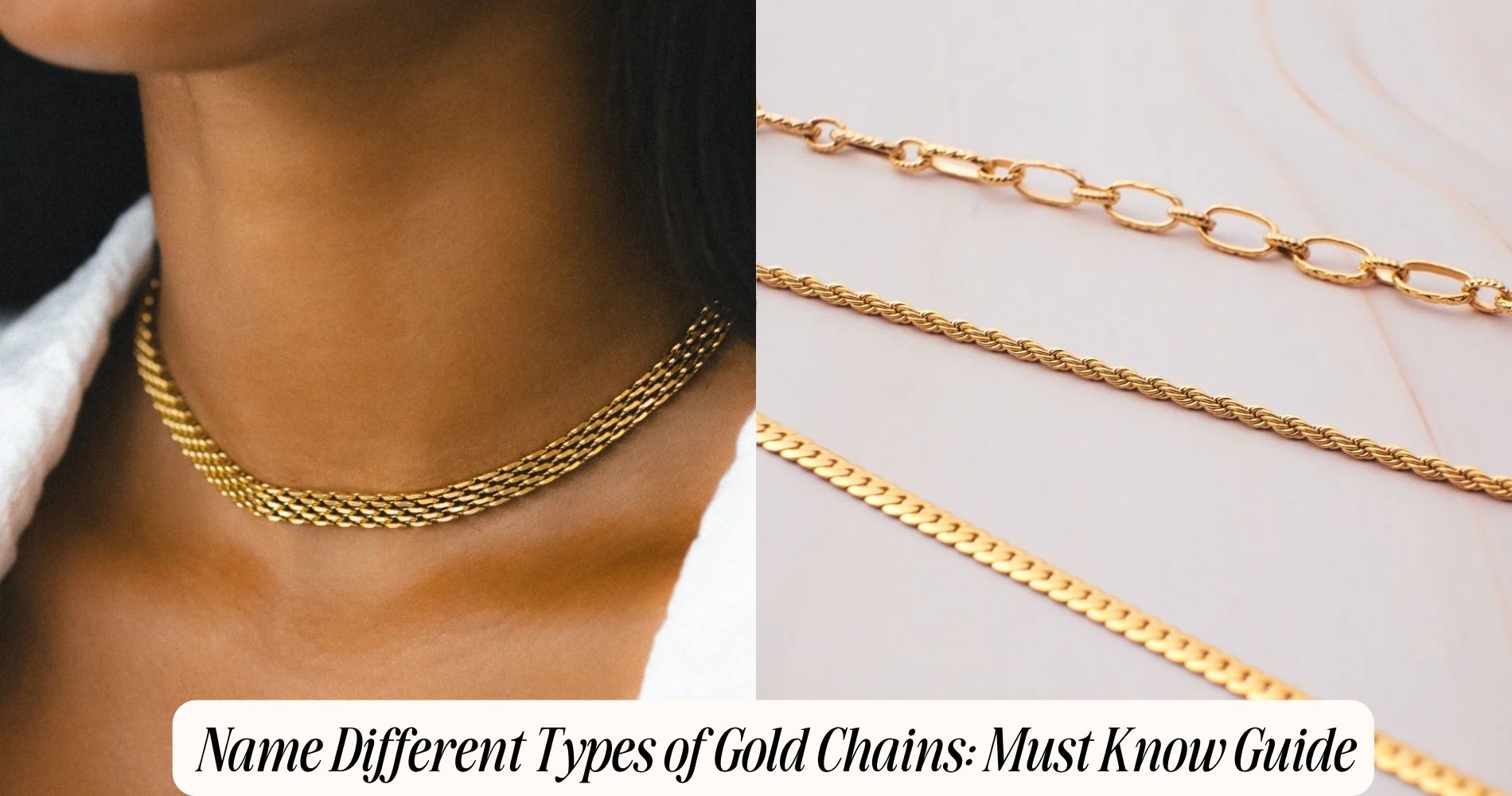
Name Different Types of Gold Chains: Must Know Guide
The gap between buying a gold chain and buying the right one is almost always a knowledge problem. Walk into any search for name different types of gold chains and you'll find long lists of styles — curb, rope, figaro, box — with very little guidance on what makes each one suited or poorly suited to how you actually wear jewelry. Durability varies significantly between chain constructions.
So does layering compatibility, pendant performance, and how each style handles the contact with skin, sunscreen, and water that comes with daily wear. This guide covers the chains you genuinely need to know, how they differ in construction and real-world wearability, and how to choose between them. The Waterproof Jewelry collection is a useful reference for seeing which chain styles translate well into everyday wear — including through the pool or ocean — without losing their finish.
The Core Chain Types: What Each One Actually Is
Most gold chain guides list fifteen or more styles. In practice, seven chain constructions account for the overwhelming majority of what's sold and worn. Understanding these seven — how their links are built, what that means for flexibility and strength — gives you the framework to evaluate any chain you encounter.
| Chain Type | Link Construction | Flexibility | Best Use |
|---|---|---|---|
| Cable | Round or oval uniform links | High | Layering, pendants, everyday |
| Figaro | Alternating short + long flat links | Medium | Standalone, pendants |
| Rope | Twisted multi-strand links | Medium-high | Solo statement, layering |
| Box | Square links connected at corners | High | Pendants, minimalist stacking |
| Herringbone | Flat V-shaped segments, no individual links | Low | Solo statement only |
| Curb | Flat interlocking oval links | Medium | Statement, chunky layering |
| Snake | Tight round plate-like links | Low-medium | Solo wear, delicate looks |
- Cable chain: The most versatile chain construction in existence. Uniform round or oval links connect in a continuous pattern — simple, clean, and strong enough to hold a pendant without distorting. Its flexibility means it moves naturally with the body and sits comfortably against the skin. For layering, it's the most forgiving: a cable chain in one width sits cleanly beside a rope or box chain without visual competition.
- Figaro chain: Italian in origin, defined by a repeating pattern of two or three short flat links followed by one longer flat link. The variation in link size creates visual rhythm that makes figaro read as more interesting than a standard cable chain without being as heavy as a curb. It lies flat against the skin, which makes it comfortable for all-day wear — including through a travel day when you'd rather not think about your jewelry at all.
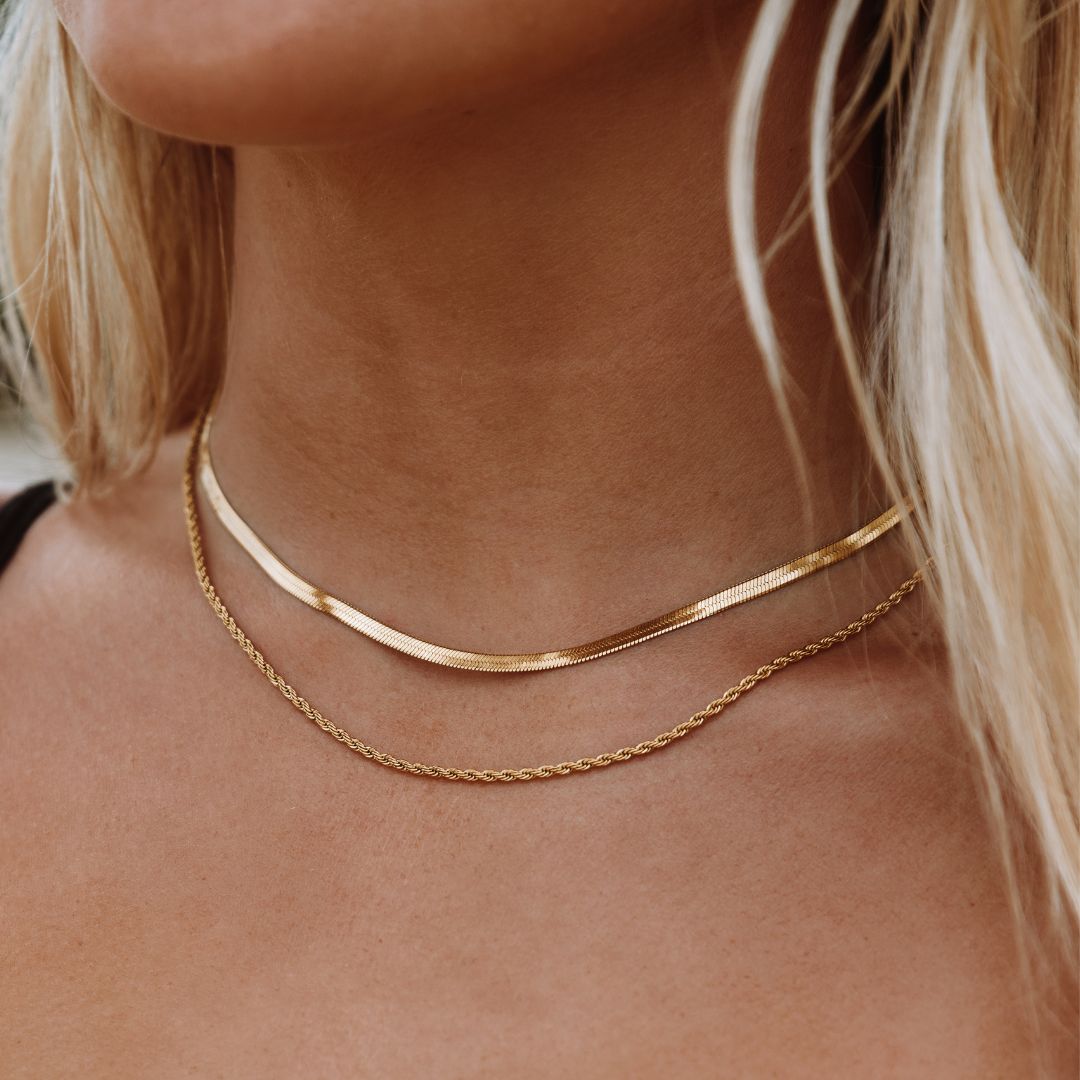
- Rope chain: Multiple strands of metal twisted together to create a textured, spiral surface. Rope chains catch light from multiple angles, which gives them more visual presence than their weight suggests. They're durable — the twisted construction distributes tension across multiple strands rather than concentrating stress on a single link. A rope chain in a slim width (1.5–2mm) layers easily; in a heavier width (3mm+), it reads as a solo statement.

- Box chain: Square links connected at their corners create a chain with a smooth, geometric surface and excellent flexibility. The squared links give it more visual presence per millimeter of width than a round cable chain. Box chains are the practical choice for pendant wear: the smooth surface doesn't create friction or accelerated wear where a pendant bale slides along the chain.
- Herringbone chain: Flat, V-shaped segments arranged in parallel rows to create a ribbon-like chain that lies completely flush against the skin. The surface is reflective and liquid in movement — visually distinctive in a way most other chain types aren't. The limitation is structural: herringbone chains kink easily when folded or caught, and once kinked, they rarely recover their original flatness. Wear one solo, keep it flat, and avoid anything that might pinch it.
- Curb chain: Interlocking oval links that are twisted and hammered flat so each link sits flush against the next. The result is a chain with visible weight and surface area — the look most associated with bold gold jewelry. Curb chains become more structurally sound at larger link sizes, which is why the most recognizable versions are the wider ones. A slim curb chain (2–3mm) can layer; anything above 5mm reads as a solo piece.
- Snake chain: Tightly packed rounded plates or rings that create a smooth, flexible tube-like surface. Snake chains are sleek and minimalist, with a look closer to a metal ribbon than a traditional link chain. They hold their shape well but can kink if bent sharply. Like herringbone, best worn solo and away from anything that might catch and crimp the construction.
Which Chain Types Hold Up to Daily Wear
Construction determines durability, and durability matters most to someone who wants to wear the same chain through a gym workout, a beach day, and a dinner out without managing it like a fragile object.
The most durable chain constructions are those where tension distributes across multiple contact points rather than concentrating at a single link. Rope chains and curb chains perform best here — the twisted construction of a rope chain and the interlocking width of a curb chain both resist deformation under the kind of stress that comes from movement and contact.
Cable and box chains are durable at reasonable widths. Very fine cable chains (under 1mm) develop weak points at link connections over time; box chains in very small sizes can have the same issue. At 1.5mm and above, both constructions hold up well to daily wear.

Herringbone and snake chains are the most vulnerable to damage from daily activity. The flat, tightly constructed surfaces that create their distinctive look also make them difficult to repair if kinked. They're not the right choice for a chain you wear through everything.
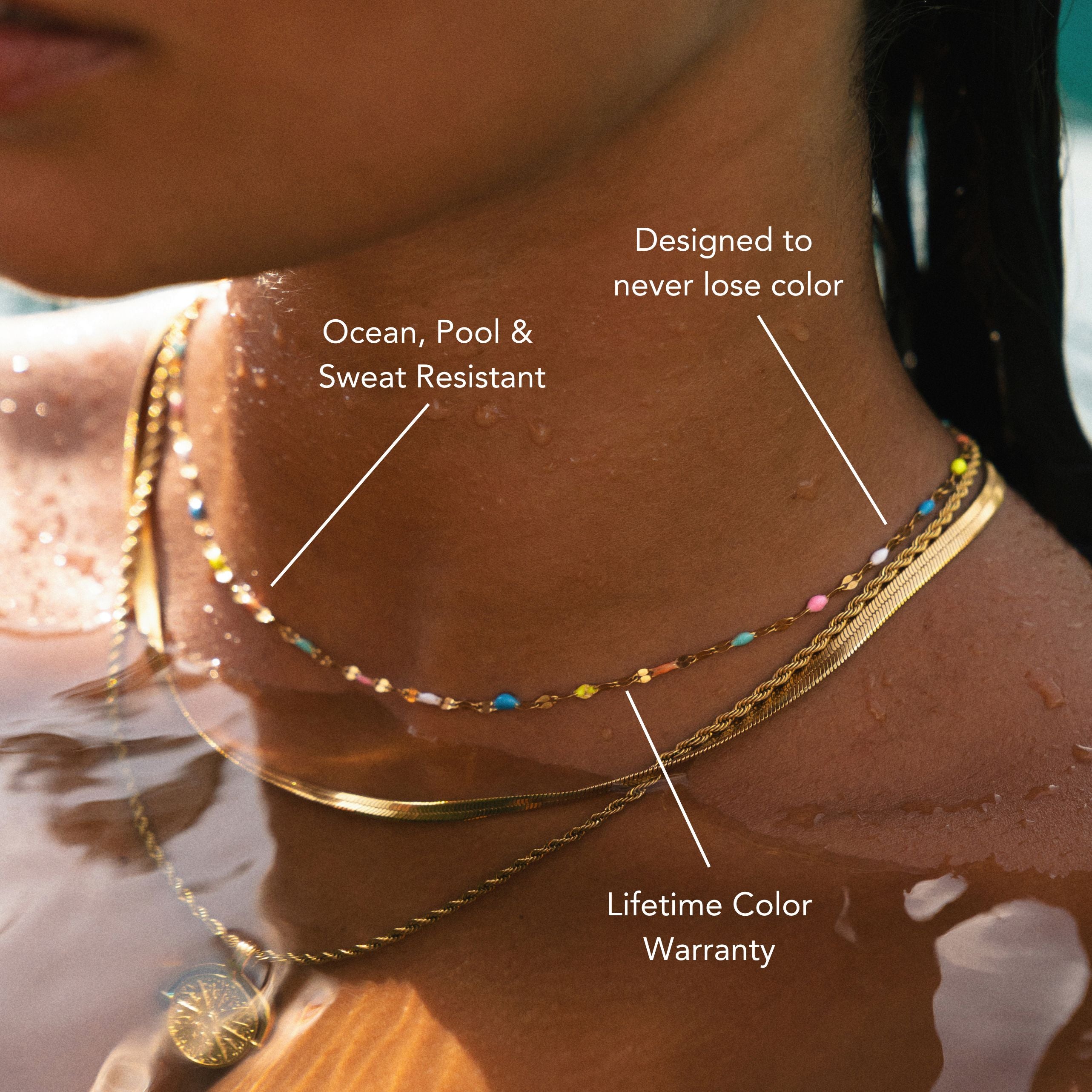
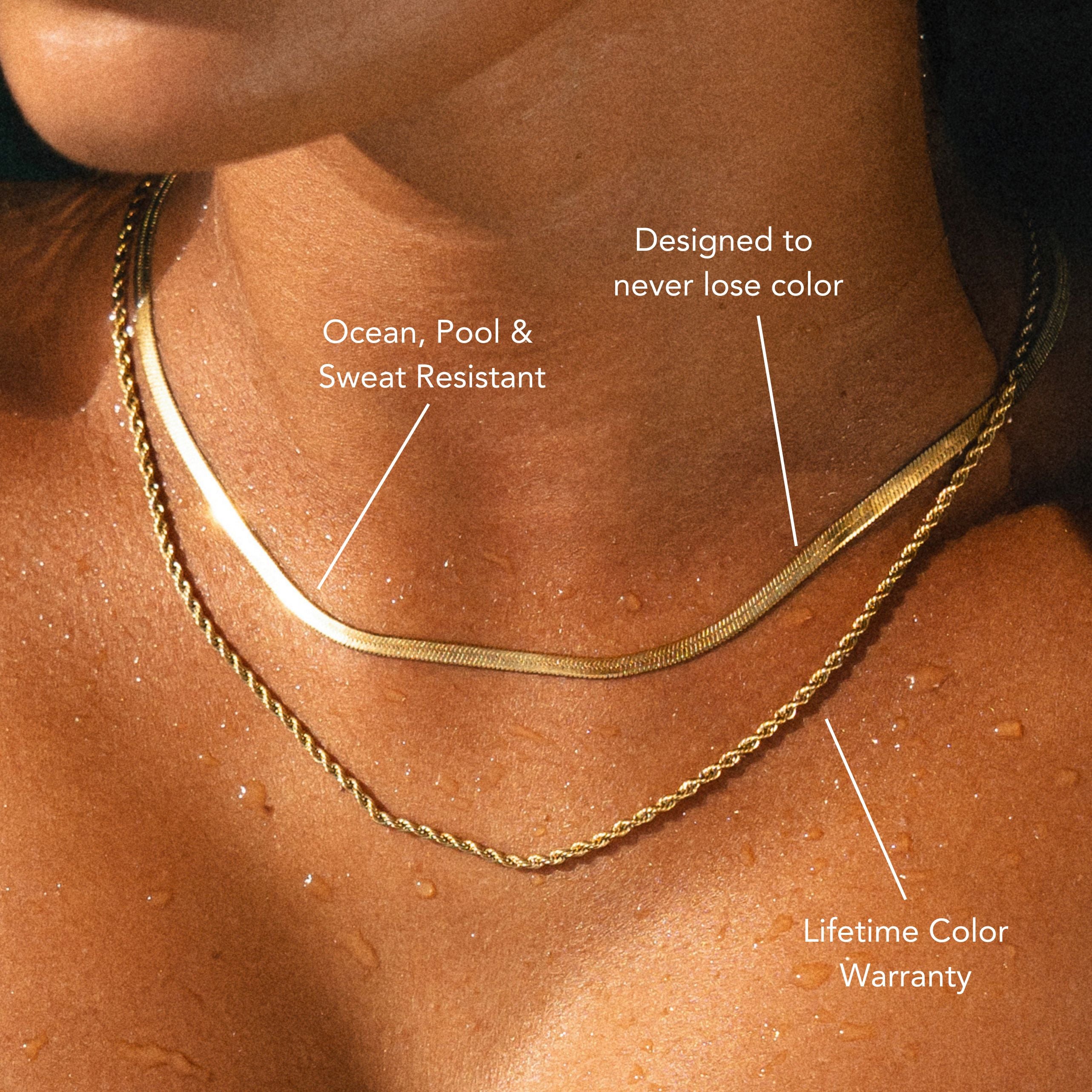
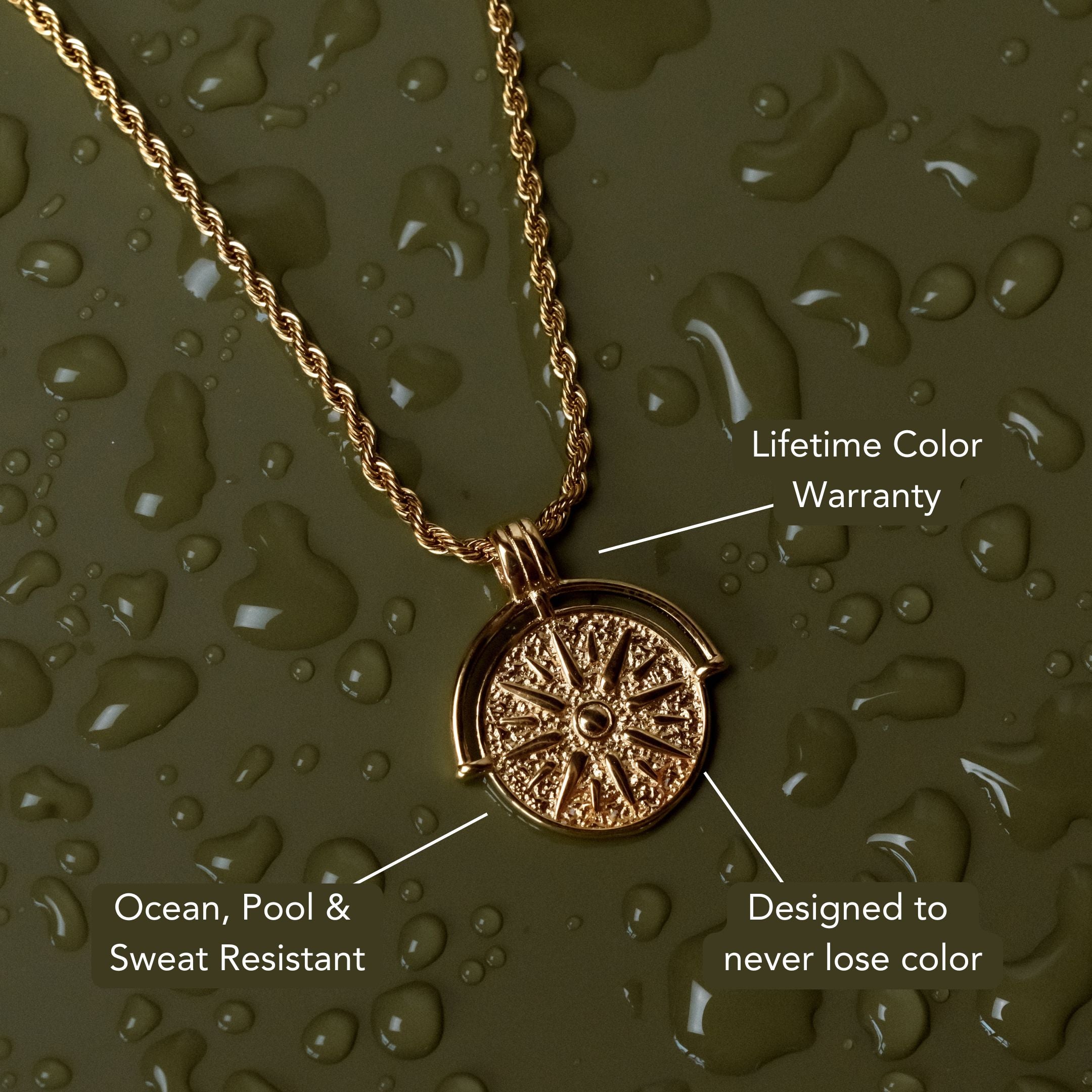
Beyond construction, the finish matters as much as the links. A cable chain made from PVD-coated stainless steel — where the gold finish bonds to the base metal at the molecular level, producing a layer 10× thicker than standard gold plating — will hold its color through sweat, sunscreen, chlorine, and salt water in a way that a standard gold-plated chain simply doesn't. The plating on a standard chain wears at contact points first: the back of the neck, the clasp area, anywhere the chain moves against skin repeatedly. On a PVD-coated chain, those points hold as well as the rest.
How to Layer Different Chain Types
Layering works when the chains in a combination differ enough to read as distinct pieces rather than blurring into a single mass of metal. Three principles determine whether a layered look holds together:
- Vary the width. Two chains of identical width worn together tend to merge visually. A 1.5mm cable chain paired with a 3mm rope chain creates clear separation. The thinner chain recedes slightly; the thicker one anchors.
- Vary the texture. A smooth box chain and a twisted rope chain create visual contrast even when worn at similar lengths. A herringbone and a cable chain create the same contrast through the difference between their flat and linked surfaces.
- Vary the length — precisely. Each chain in a layered combination should sit at a clearly different length. The standard increments that work: 14–16 inches (sits at the collarbone), 18 inches (sits just below), 20 inches (mid-chest). Chains within 1–2 inches of each other will tangle and won't read as a deliberate layered look.
A practical starting combination: a fine cable chain at 16 inches, a rope or figaro chain at 18 inches, and a longer pendant or chain at 20 inches. The cable provides a delicate base layer; the rope or figaro adds mid-weight texture; the longest layer draws the eye down and anchors the combination.

Choosing a Chain for Pendant Wear vs. Standalone Wear
The decision between pendant-supporting and standalone wear changes which chain type makes sense.
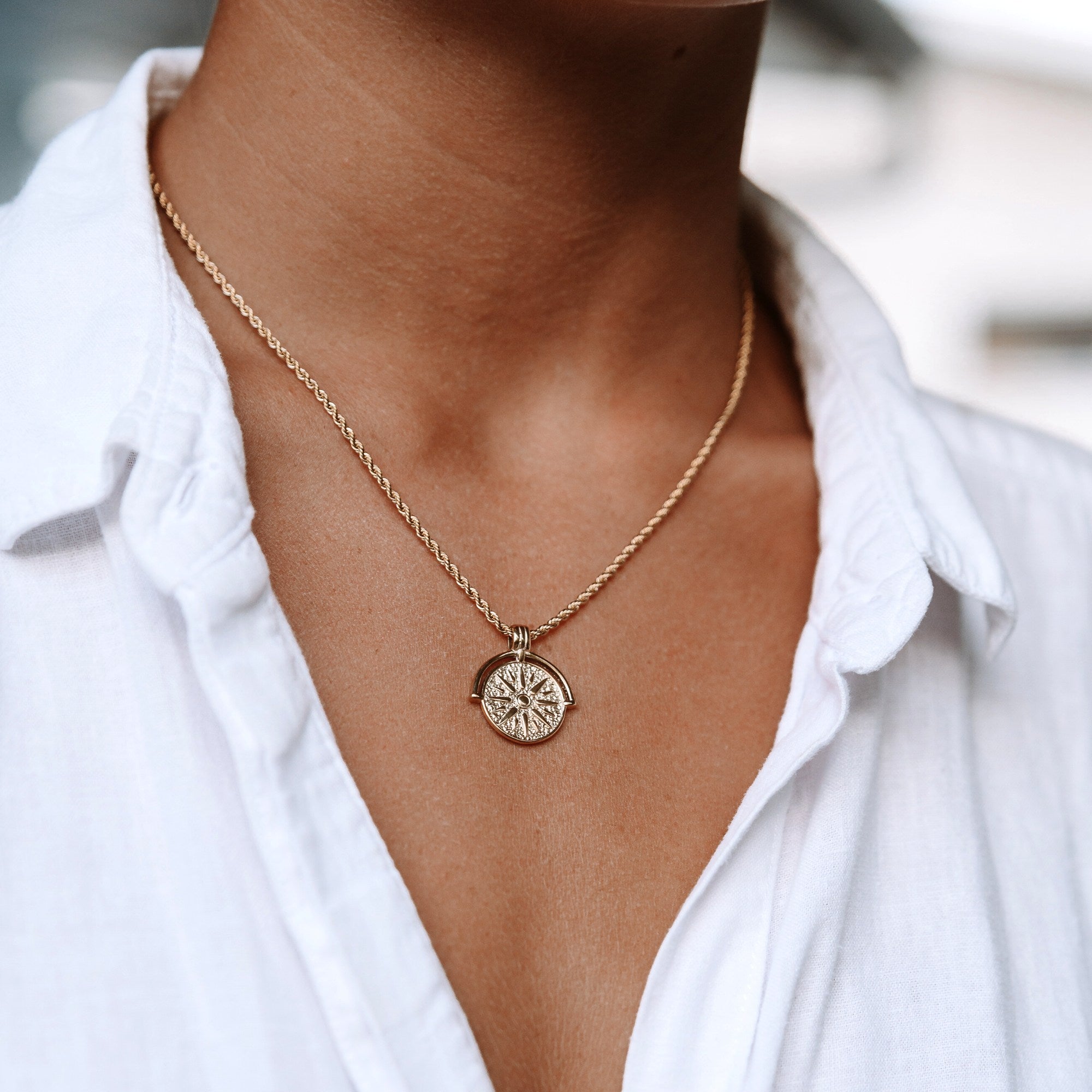
For pendant wear, the chain is a backdrop — it needs enough structural integrity to hold the pendant without distorting, and a surface smooth enough not to create friction where the pendant bale slides. Box chains and cable chains are the most practical choices here. Their even link construction doesn't create the irregular catch points that a figaro or rope chain can develop with a bale sliding back and forth over time.
For standalone wear, the chain is the piece — so construction and visual weight take on more importance. A rope chain in a heavier width, a herringbone at full width, or a curb chain in a bold size all have enough presence to wear without anything hanging from them. The chain itself creates the look.
A few chains work well in both contexts: a medium-weight cable chain (2–2.5mm) can carry most pendants and still hold its own as a standalone piece. A slim rope chain (1.5mm) can serve as a delicate pendant chain or as the base layer in a multi-chain combination.
Frequently Asked Questions
What are the most common types of gold chains I should know?
The seven chains worth knowing are cable, figaro, rope, box, herringbone, curb, and snake. These account for the vast majority of gold chains available. Cable and box chains are the most versatile for everyday wear and pendant use. Rope and curb chains carry more visual weight and work best as standalone pieces or in bold layered combinations. Herringbone and snake chains are the most distinctive but the least durable for active daily wear.
Which type of gold chain is the most durable for everyday wear?
Rope and curb chains are the most durable constructions — both distribute tension across multiple link contact points rather than concentrating stress at individual connections. At similar widths, they outlast cable, box, herringbone, and snake chains in terms of resistance to deformation. Material matters equally: PVD-coated stainless steel holds its finish significantly longer than standard gold-plated chains, particularly at friction points like the back clasp and the neck contact area.
What type of gold chain is best for layering?
Cable chains are the most layering-friendly — their uniform, flexible construction sits cleanly alongside other chains without tangling or competing visually. For a layered combination, pair a slim cable chain with a textured rope or figaro chain at a different length. The key variables are width (vary it between chains) and length (keep at least 2 inches of difference between each layer to prevent tangling).
Can you name different types of gold chains that work for pendant necklaces?
Box chains and cable chains are the most practical choices for pendant wear. Both have smooth, consistent link surfaces that allow a pendant bale to slide freely without creating catch points or accelerated wear. Rope and figaro chains can work for pendants but may show wear faster at the bale contact point over time. Herringbone and snake chains are not recommended for pendants — their flat constructions aren't designed to handle the movement of a bale.
What is the difference between a curb chain and a cable chain?
A cable chain uses uniform round or oval links connected in a simple continuous pattern — lightweight, flexible, and clean in appearance. A curb chain uses flat, interlocking oval links twisted so they lie flush against each other — heavier, with a more visible surface area and more visual weight per inch. Cable chains read as delicate to medium-weight; curb chains read as bold and structured, especially at larger link sizes.
Do gold chain types differ in how they hold up to water and sweat?
Chain construction affects how easily a chain collects and traps moisture — herringbone and snake chains, with their tightly packed surfaces, can hold water and salt against the metal more than open-link constructions like cable or box chains. More significantly, the finish determines color longevity: standard gold plating wears fastest at contact points, while PVD coating — bonded at a molecular level — holds its finish through repeated exposure to water, sweat, and salt without the base metal showing through.
Knowing Your Chains Before You Buy
Once you can name different types of gold chains with confidence — cable, figaro, rope, box, herringbone, curb, snake — the decision between them becomes practical rather than arbitrary. Construction determines durability and layering compatibility. Finish determines how long the color holds. The combination of a chain type that suits your wearing habits and a coating that can handle real daily contact removes the compromise between jewelry that looks good and jewelry you actually live in. The waterproof jewelry range gives a clear view of how different chain styles perform when the finish is built to last.






Leave a comment
This site is protected by hCaptcha and the hCaptcha Privacy Policy and Terms of Service apply.