


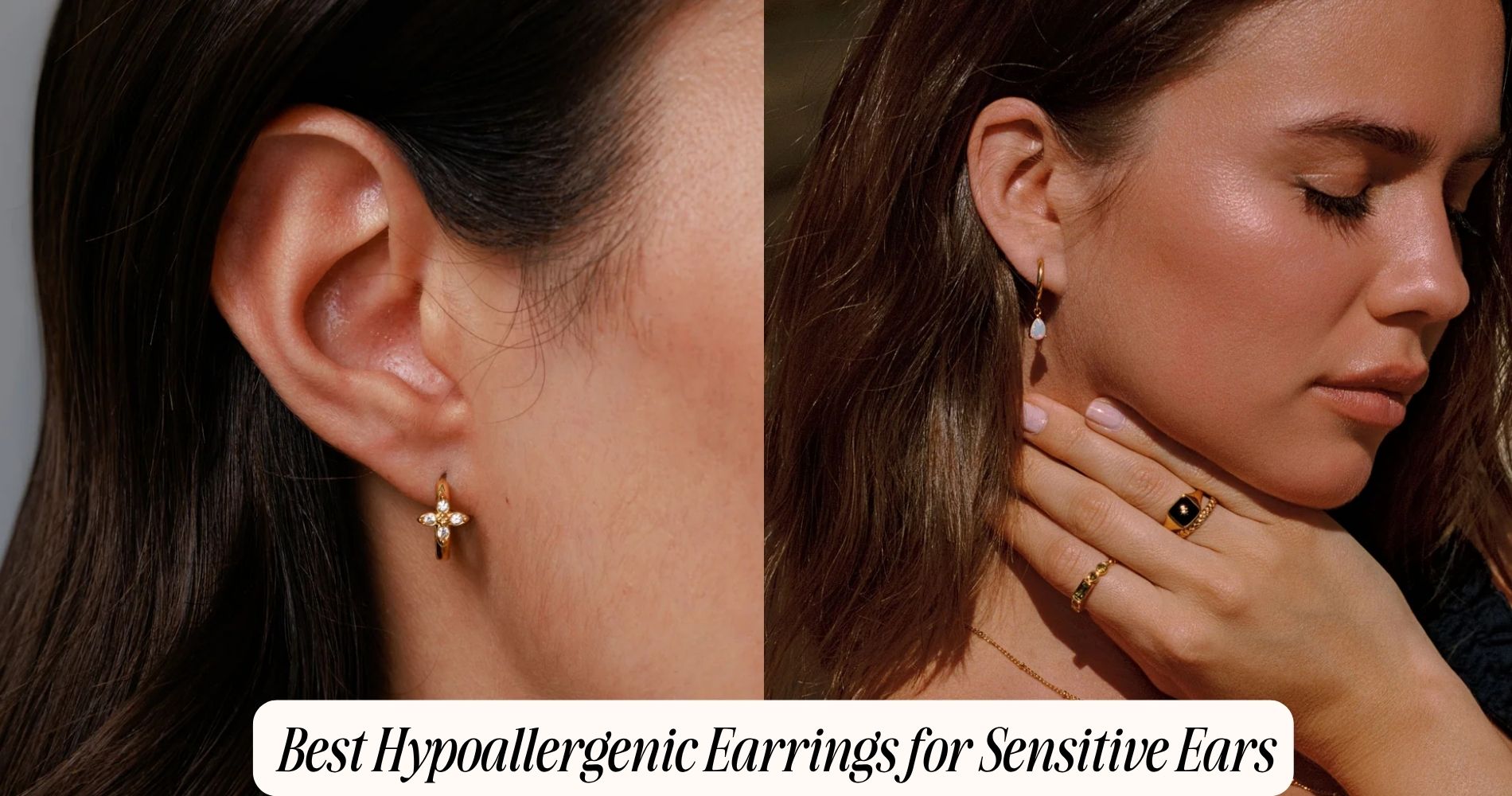
Best Hypoallergenic Earrings for Sensitive Ears
Choosing the right hypoallergenic earrings for sensitive ears starts with selecting low-reactivity materials like titanium, niobium, surgical stainless steel (316L/316LVM), or high-karat gold. These metals help reduce the risk of irritation, while nickel, brass, cheap alloys, and thin plating are more likely to trigger reactions over time. For new piercings, smooth studs or hoops made from implant-grade materials are often the safest choice, especially when paired with proper saline cleaning. It’s also smart to look for brands that provide lab testing or nickel-release information. Comfortable options from the Allergy-free Earrings collection are designed with sensitive ears in mind for easier everyday wear. Keep reading to explore the best hypoallergenic earrings for sensitive ears, including trusted materials, care tips, and safe shopping advice.
What “Hypoallergenic” Means for Earrings
Hypoallergenic earrings are designed to minimize the risk of skin reactions by using materials and finishes that rarely trigger contact dermatitis or allergic responses; they don’t guarantee zero reactions because individual sensitivities vary.
You should know hypoallergenic definitions focus on relative likelihood of reaction, not an absolute standard—manufacturers may label items based on lower nickel content, inert metals, or protective coatings.
For earring safety you’ll check for certified materials like surgical stainless steel, titanium, niobium, or high-karat gold, and for clear labeling about nickel release.
You’ll also consider finish durability, since worn coatings can expose reactive alloys.
If you’ve had reactions, patch testing and consultation with a dermatologist give objective guidance so you can choose earrings that truly reduce your risk.

Quick Guide: Which Material to Choose for Your Sensitivity
When you choose earrings based on your sensitivity, focus on specific metals and coatings that have documented low rates of allergic reaction and reliable testing for nickel release.
Start by identifying your trigger — if patch tests show nickel sensitivity, pick tested, nickel-free options or pieces with nickel-release certification.
If you prefer low-chemical choices, explore natural alternatives like wooden or certain ceramic posts, but verify glues and finishes.
Coatings such as thick rhodium or high-quality plating reduce contact but can wear; choose pieces with clear wear warranties.
Read product testing details and seek sellers who publish lab results.
Balance objective data with personal experiences from verified reviewers to judge longevity and real-world tolerance before buying.
Safest Metals: Surgical Steel, Titanium, Niobium, Platinum
Four metals stand out for minimal allergic reactions and reliable testing: surgical (316L/316LVM) steel, titanium, niobium, and platinum.
You’ll appreciate surgical steel benefits: 316L/316LVM is low in nickel release, widely tested, and resists corrosion, making it a reliable everyday choice if your piercings are healed.
Titanium offers exceptional biocompatibility and light weight; its titanium durability means it withstands wear and won’t deform easily, so it’s ideal for active lifestyles and new piercings.
Niobium is inert and can be anodized for color without compromising safety, so you can match style with sensitivity.
Platinum is noble, hypoallergenic, and highly resistant to tarnish; it’s the premium option when you want maximum compatibility and longevity.

Metals to Avoid: Nickel, Brass, Cheap Alloys, Plated Bases
Although some metals look attractive or inexpensive, you should avoid nickel, brass, cheap alloys, and plated bases because they commonly cause irritation, allergic contact dermatitis, and long-term complications.
You’re likely to encounter nickel allergies from costume jewelry and some gold alloys; even small nickel releases can trigger itching, redness, or blistering.
Brass reactions often stem from copper and zinc content, producing green discoloration and dermatitis in sensitive users.
Cheap alloys lack purity controls, so unpredictable metal release elevates irritation risk and can complicate healing.
Plated irritation occurs when thin coatings wear away, exposing reactive base metals underneath.
Choose solid, certified hypoallergenic materials instead; if you suspect a reaction, stop wearing the piece and seek patch testing or dermatology advice.
Choose Studs, Hoops, and Drops by Sensitivity Level
Curious which earring style will bother your ears least? Match earring styles to your sensitivity levels to reduce reactions.
If you have high sensitivity levels, choose simple studs with solid posts—short contact, minimal surface area, and secure backs lower irritation risk.
For moderate sensitivity, small hoops with continuous, smooth surfaces work well; they distribute contact and avoid concentrated pressure points.
If your sensitivity is low, drops and longer dangles can be comfortable, but pick lightweight designs to limit tugging.
In all cases, inspect seams, solder points, and closures that can trap moisture or expose reactive metals.
Try one type at a time for a week to monitor skin response. That evidence-based, incremental approach helps you identify which styles your ears tolerate.

Best Hypoallergenic Materials by Budget: < $50, $50–$200, Splurge
When you're shopping on a budget, know that several truly hypoallergenic options exist at every price point—it's just a matter of material and finish.
Under $50, prioritize surgical stainless steel (316L/316LVM), titanium-plated brass with sealed posts, and gold-filled studs; these affordable options resist corrosion and nickel release when well-made.
In the $50–$200 range, you can access higher-purity titanium, solid 14k gold, and implant-grade niobium—material differences here reduce reactive alloys and improve long-term tolerability.
Splurge pieces include 18k+ solid gold, platinum, and high-grade implant titanium with flawless finishes; they minimize trace metals and surface roughness.
Always check for certifications, hypoallergenic claims, and reputable finish processes to guarantee the material performs as advertised.
Best Styles and Practices for New Piercings and Healing Ears
If you’re getting a new piercing or nursing a fresh one, choose simple, smooth studs or hoops that won’t snag and opt for implant-grade materials like titanium, niobium, or 14k+ gold to minimize irritation; these choices reduce mechanical trauma and limit exposure to reactive metals while the hole epithelializes.
You should clean with saline twice daily, avoid alcohol or peroxide, and wash hands before touching the site. Rotate jewelry only if recommended by your piercer. Keep hair, helmets, and clothing away to prevent accidental pulls.
Watch for signs of infection—increasing pain, swelling, pus, or fever—and seek professional care. Evidence-based healing techniques and practical aftercare tips will shorten recovery and lower complication risk.
Test and Clean Hypoallergenic Earrings Safely at Home
Before you wear or clean hypoallergenic earrings, inspect and test them carefully so you don’t introduce irritants or contaminants to pierced skin.
First, check manufacturer markings and look for discoloration, rough edges, or plating wear that can trap bacteria.
For DIY cleaning, wash hands, remove visible debris with a soft brush, then soak earrings (not porous components) in 70% isopropyl alcohol for one minute or a 1:10 diluted household bleach solution for 30 seconds; rinse with sterile water and dry on a lint-free cloth.
Test by wearing for short periods and monitor for redness or itching.
Store cleaned pieces in breathable, labeled earring storage—individual compartments or pouches—to prevent cross-contamination and reduce exposure to moisture and tarnish.
Where to Buy Trusted Hypoallergenic Earrings and Brands
Shopping smart for hypoallergenic earrings lets you avoid irritation and invest in pieces that last.
Start with reputable jewelers and medical-grade retailers—look for clear material sourcing (titanium, implant-grade stainless steel, niobium, or 14k+ gold) and published allergy testing.
Check brand transparency: independent lab results, nickel-free certifications, and customer reviews that mention long-term wear and earring care.
Buy from sellers who describe plating thickness and re-plating policies; thin plating often fails and causes reactions.
Consider specialty brands focused on sensitive ears and established retailers with easy returns and hygiene guarantees.
When possible, purchase from vendors that offer sterilization or sealed packaging.
Keep records of receipts and certifications to verify claims if you need replacements or refunds.

Frequently Asked Questions
Can Hypoallergenic Earrings Still Cause Contact Dermatitis After Months?
Yes — you can develop contact dermatitis after months; contact dermatitis triggers like nickel release, buildup, or sensitization can emerge over time, so you should monitor reactions and follow long term ear care to prevent worsening.
Are Magnetic or Clip-On Hypoallergenic Options Safe for Sensitive Ears?
Yes — you can use magnetic or clip-on hypoallergenic options safely if you choose medical-grade magnets or nickel-free, padded clips; they’ll reduce irritation, but monitor pressure, skin reactions, and rotate styles to prevent contact dermatitis over time.
How Do Body Jewelry Gauges and Thickness Affect Allergic Reactions?
Gauge and thickness affect reactions: smaller gauges and thicker posts reduce movement and irritation, lowering metal allergies risk, but jewelry materials matter most—choose inert metals like titanium or implant-grade stainless steel to prevent allergic responses.
Are Vintage or Antique Earrings Safe for Sensitive Ears?
They can be, but you shouldn’t assume safety; vintage materials and antique designs often contain nickel or mixed alloys, so you’ll test, clean, and consider replacing posts with known hypoallergenic metals to avoid reactions and guarantee comfort.
Can Nonmetal Materials Like Silicone or Wood Be Used Long-Term?
Yes—you can wear silicone and wood long-term if you choose materials wisely; silicone benefits include flexibility, hypoallergenic inertness, and easy cleaning, while wood durability depends on sealant quality and maintenance, so replace porous pieces promptly.
Conclusion
You can protect sensitive ears by choosing truly hypoallergenic materials—surgical steel, titanium, niobium, or platinum—and avoiding nickel, brass, cheap alloys, and plated bases. Match style to sensitivity: start with studs for new or reactive piercings, try hoops or drops once healed, and prioritize solid metals over coatings. Clean and test earrings safely at home, follow aftercare for new piercings, and buy from reputable brands with clear metal disclosures to minimize reactions.





,%20or%20high-karat%20gold.%20Thes...)
Leave a comment
This site is protected by hCaptcha and the hCaptcha Privacy Policy and Terms of Service apply.