


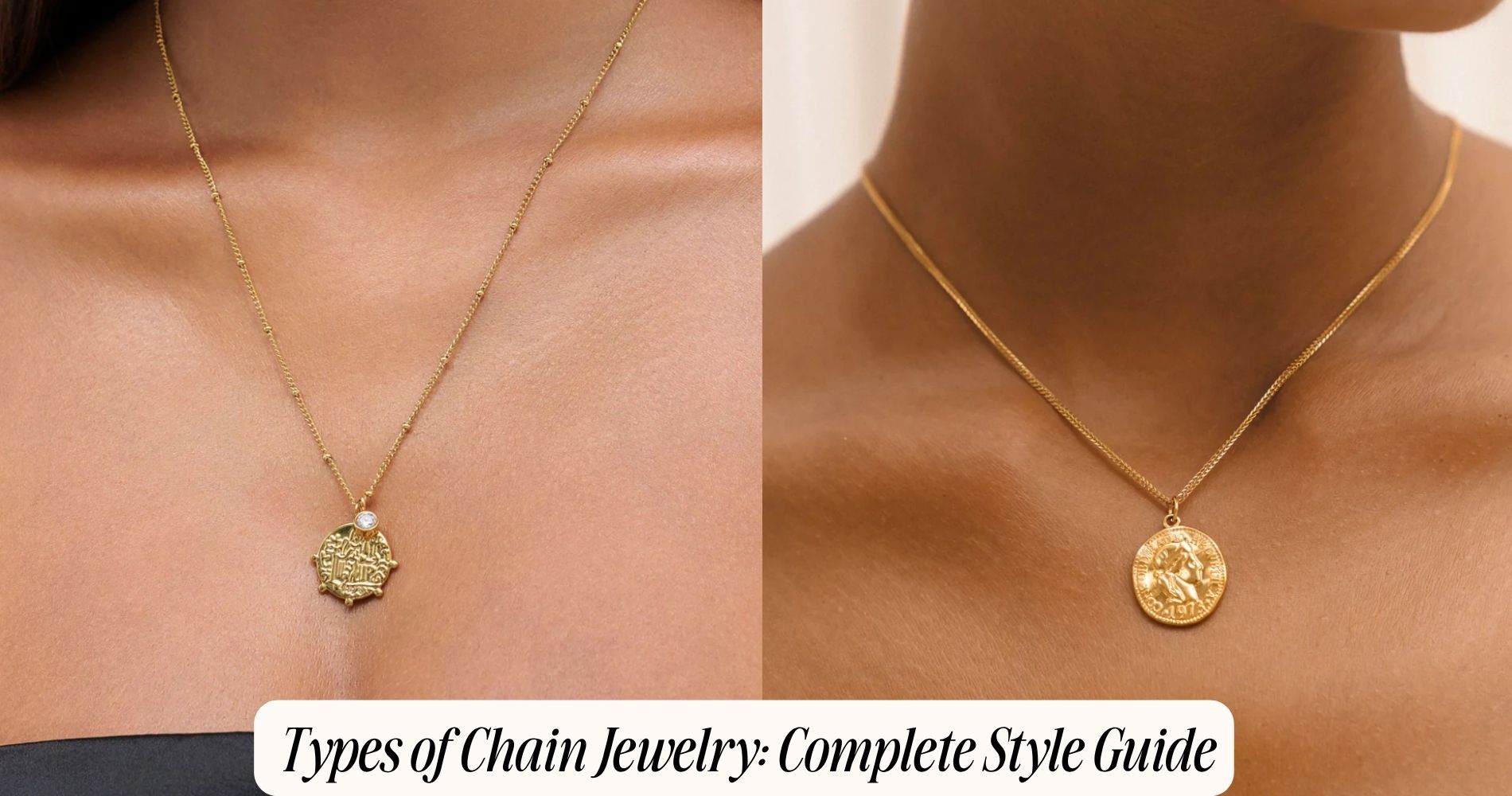
Types of Chain Jewelry: Complete Style Guide
Walk into any jewelry section and the chain options alone - cable, rope, figaro, herringbone, box, curb - can stop you cold. Most guides respond by listing every style they can name, which makes the decision harder rather than easier. What actually matters is understanding types of chain jewelry by how they're built, what that means for durability and layering, and which construction suits how you wear jewelry day to day.
The Waterproof Necklaces collection organises this by wear-ready styles across necklaces, bracelets, and anklets - useful context for seeing how chain types translate from description to reality. This guide covers the essential chain constructions, how to choose between them for different uses, and how to build combinations that work rather than just coexist.
The Core Types of Chain Jewelry: Construction and Character
Seven chain constructions account for the overwhelming majority of chain jewelry worn daily. Understanding the build logic behind each one - not just the appearance - gives you a framework that applies whether you're choosing a necklace, a bracelet, or an anklet.
| Chain Type | Link Construction | Flexibility | Durability | Best Application |
|---|---|---|---|---|
| Cable | Uniform oval/round links | High | Medium-high | Pendants, layering, everyday |
| Box | Square links at corners | High | High | Pendants, minimalist stacking |
| Figaro | Alternating short + long flat links | Medium | Medium-high | Solo wear, pendants |
| Rope | Twisted multi-strand links | Medium | High | Statement solo, heavy layering |
| Curb | Flat interlocking oval links | Medium | High | Bold solo, chunky stacking |
| Herringbone | Flat V-shaped segments | Low | Low-medium | Solo statement only |
| Snake | Tight plate-like curved segments | Low-medium | Medium | Solo, delicate looks |

Which Types of Chain Jewelry Layer Well Together
Layering chain jewelry works on contrast - contrast in width, texture, and construction - rather than similarity. Two chains of identical construction and width worn together merge visually into a single mass of metal rather than reading as two distinct pieces.
The pairing combinations that create clear visual separation:
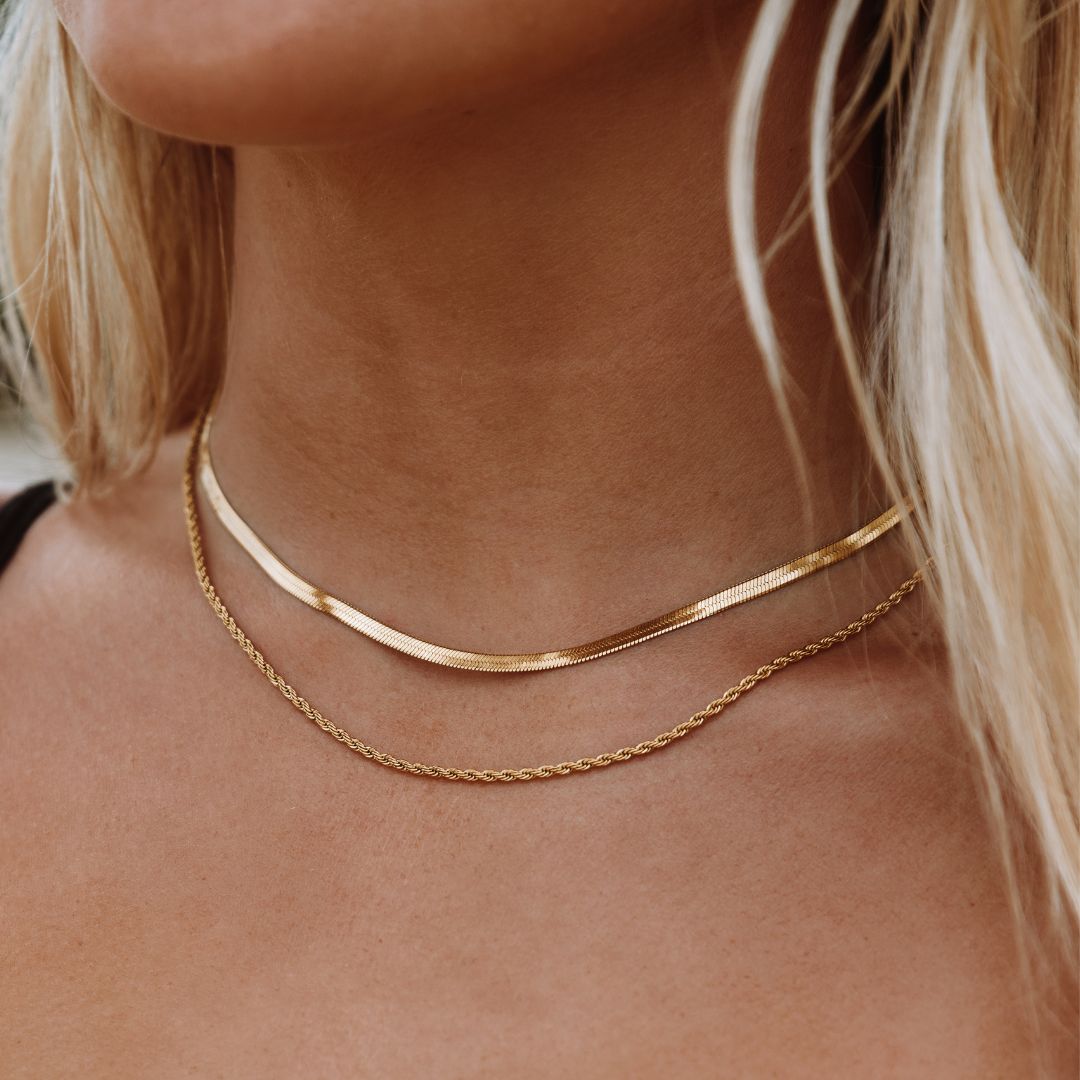
Cable + rope: The smooth, uniform surface of a cable chain and the twisted, textured surface of a rope chain create immediate contrast even when worn at similar widths. Keep the cable thinner (1.5mm) and the rope slightly heavier (2.5–3mm) for the best proportion - the texture of the rope chain reads against the simplicity of the cable without either dominating.
Box + figaro: Both chains are flat-lying constructions, but the geometric surface of a box chain and the rhythmic link variation of a figaro read as distinct. Pair a slim box chain as the shortest layer with a figaro at mid-length - the different link patterns separate them visually even at similar widths.
Curb + cable: A curb chain has enough structural presence and visual weight to anchor a layered combination. A fine cable chain (1–1.5mm) at a shorter length provides a delicate counterpoint to the curb's solid geometry. The scale difference between the two constructions does the visual work.
What to avoid when layering: Chains of the same construction and similar width (two cable chains, or two rope chains) worn at lengths within 2 inches of each other will tangle and appear as a single chain rather than a deliberate combination. Separate lengths by at least 2 inches - ideally 4 - and ensure the constructions differ enough that each chain is individually readable.

Material Determines How Long Any Chain Type Keeps Its Look
Chain construction determines how a piece moves, layers, and wears structurally. The material and finish determine how long it maintains its appearance - and the gap between constructions becomes irrelevant if the finish fails before you've had time to appreciate the difference.
Standard gold-plated chains apply a gold layer - often 0.5 microns or less - over a brass or copper base. The plating wears fastest at friction points: the inner links of a bracelet where metal contacts skin, the clasp area, and anywhere a pendant bale moves repeatedly across the chain. On a rope or figaro chain, the irregular surface means friction is distributed unevenly - some link edges wear faster than others, and the plating breakdown often starts there.

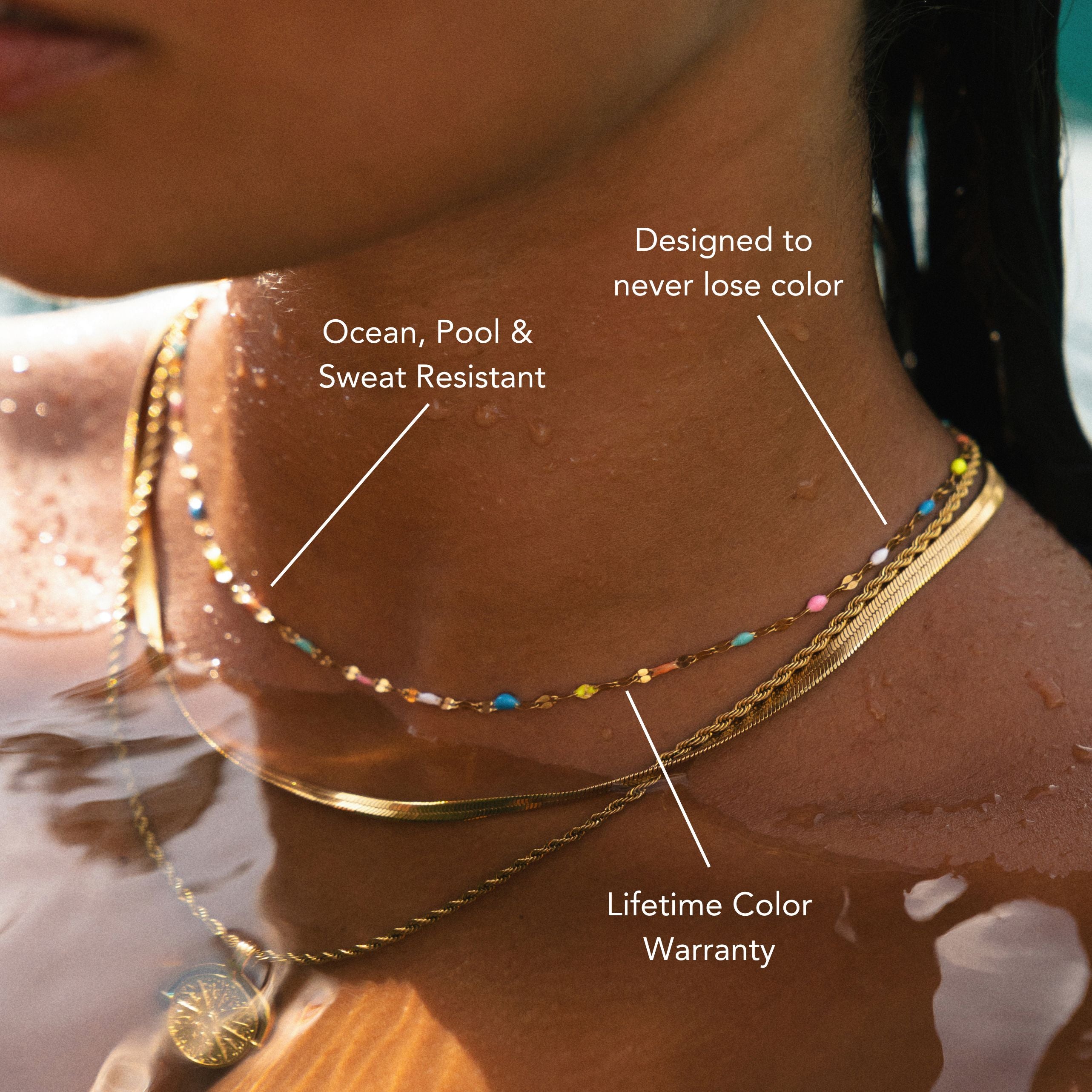
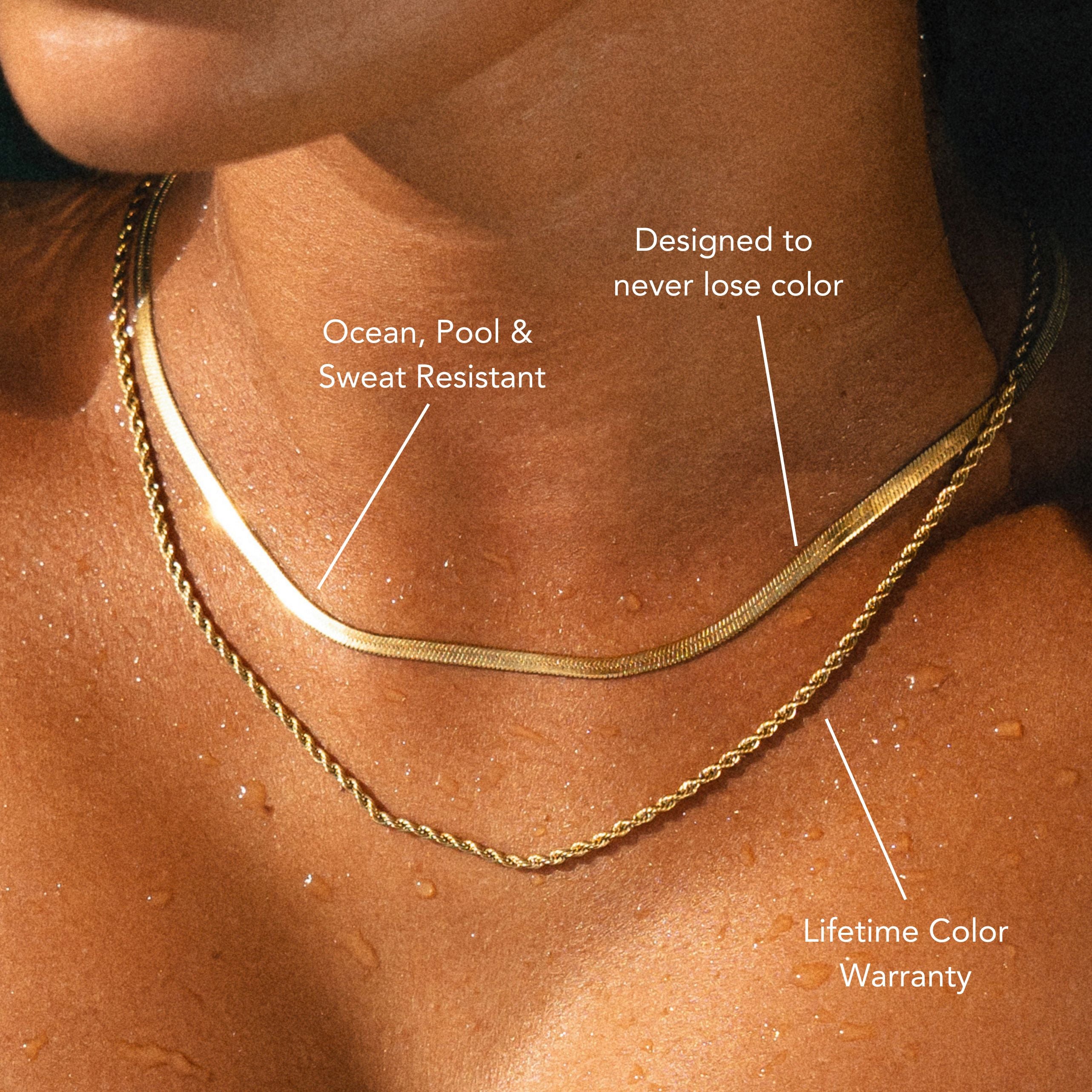
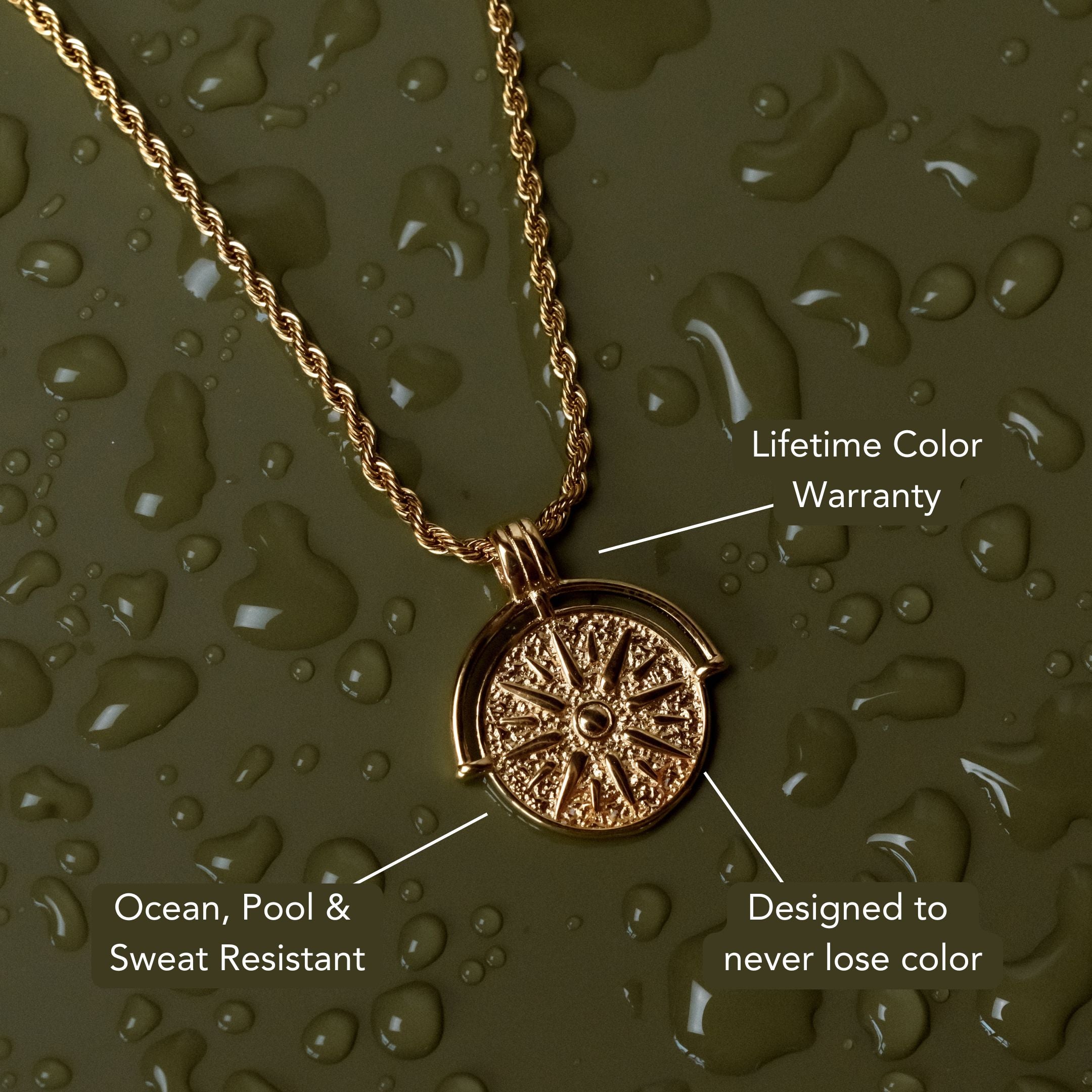
PVD (Physical Vapor Deposition) coating bonds gold to stainless steel at the molecular level, producing a finish 10× thicker than standard plating. The bonded surface doesn't react to sweat, sunscreen, chlorine, or salt water - which changes the practical calculation for every chain type across all three jewelry formats. A cable chain anklet worn through beach days and ocean swims, a box chain bracelet worn through gym sessions, a rope chain necklace that never comes off during travel - all of these only work without compromising the chain's finish when the coating is built for actual contact rather than careful handling.
Frequently Asked Questions
What are the most common types of chain jewelry?
Cable, box, figaro, rope, curb, herringbone, and snake chains cover the constructions worn most often across necklaces, bracelets, and anklets. Cable and box chains are the most versatile - suitable for pendants, layering, and daily wear in all three formats. Rope and curb chains carry more visual weight and work best as standalone pieces or as anchor chains in a layered combination. Herringbone and snake chains are the most visually distinctive but require the most careful handling.
Which types of chain jewelry are best for everyday wear?
Box and cable chains handle daily wear most reliably - their open-link constructions distribute contact stress evenly and don't trap moisture or debris. Rope and curb chains are durable enough for daily necklace wear but become higher-maintenance as bracelets or anklets. Herringbone and snake chains are the least suited to active daily wear in any format; their flat, continuous surfaces kink under pressure that open-link chains simply flex through.
What type of chain is best for a pendant necklace?
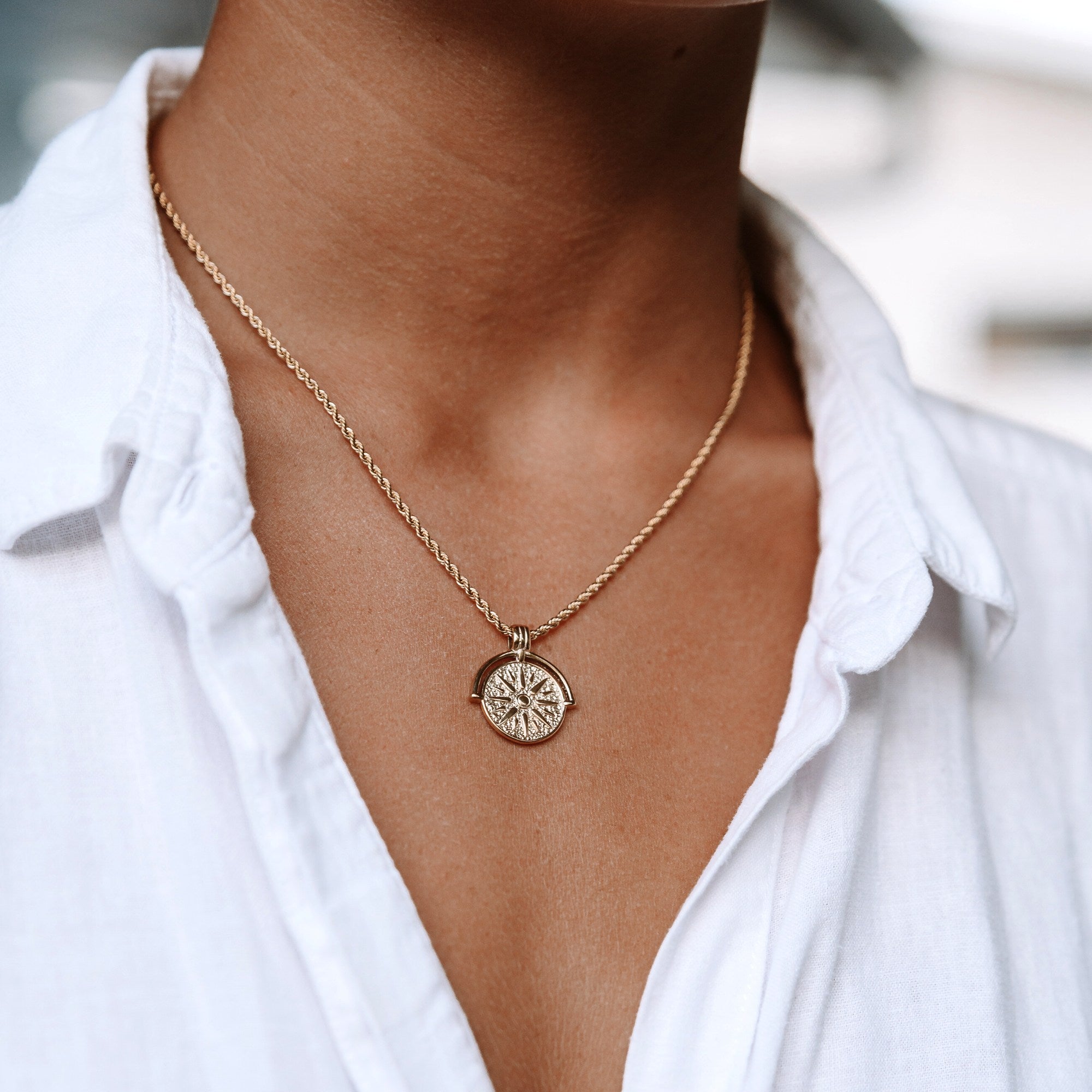
Box and cable chains are the most practical pendant chains. Both have smooth, consistent link surfaces that allow a pendant bale to slide freely without creating friction wear at the contact point. Rope and figaro chains work for pendants but can develop uneven wear at the bale over time - the irregular link surfaces mean some contact points receive more friction than others. Herringbone and snake chains are not designed for pendant use.
Can I layer different types of chain jewelry?
Yes, and varying the chain construction is what makes layering look intentional rather than accumulated. The most effective combinations pair chains with contrasting textures - cable with rope, box with figaro, curb with cable - at lengths separated by at least 2 inches. Chains of the same construction and similar width at close lengths will tangle and merge visually rather than reading as distinct layers.
Conclusion
Understanding types of chain jewelry by their actual construction - how the links connect, how that affects flexibility and durability, where each type performs well and where it doesn't - turns what feels like an arbitrary aesthetic choice into a practical one. The right chain construction for how you wear jewelry, in the right material for how actively you wear it, produces pieces that look as good after months of daily wear as they did on day one. The waterproof necklace range covers the constructions that translate best into genuine daily wear - across lengths, widths, and the kind of use that most chain jewelry isn't actually built to handle.






Leave a comment
This site is protected by hCaptcha and the hCaptcha Privacy Policy and Terms of Service apply.