


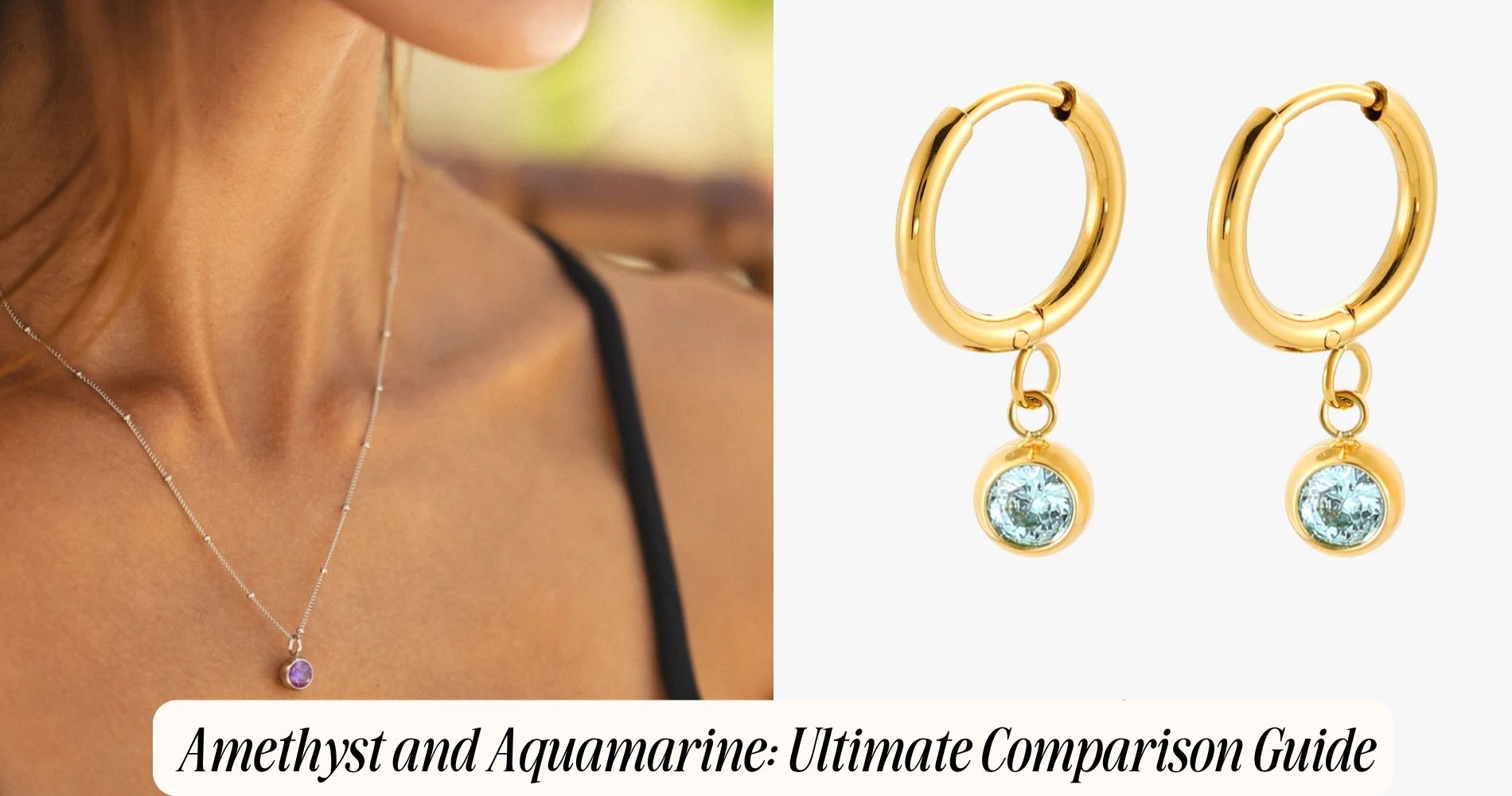
Amethyst and Aquamarine: Ultimate Comparison Guide
When comparing amethyst and aquamarine, you’ll notice clear differences in color, symbolism, durability, and overall style appeal. Amethyst is known for its rich violet tones and calming, introspective associations, while aquamarine stands out for its blue-green clarity and slightly greater hardness, making it more resistant to daily wear. Their geological origins also influence color zoning, clarity, and value, and each gemstone may undergo different treatments such as heat enhancement or irradiation. Cut and light reflection further affect how these stones appear in jewelry. Pieces from the Stone Collection showcase how both gemstones can create distinct yet timeless looks. Keep reading for a detailed comparison of amethyst and aquamarine, including grading, pricing, care, and the best uses for each gemstone.
Quick Decision: Amethyst or Aquamarine?
Which gem suits you best depends on your priorities. You’ll assess hue, hardness, and intended function: amethyst offers violet saturation, aquamarine yields blue-green clarity.
For visual coding, color symbolism guides mood design—amethyst signals introspection, aquamarine communicates calm. Functionally, amethyst rates 7 on Mohs, aquamarine 7.5–8, so you’ll choose aquamarine for higher abrasion resistance in daily wear.
If therapeutic claims matter, compare reported healing properties objectively: amethyst is associated with stress reduction, aquamarine with respiratory and throat support in metaphysical literature; neither replaces clinical treatment.
Consider price per carat, clarity distributions, and typical heat treatments before deciding. You’ll weigh aesthetics, durability, and documented attributions to make a concise, data-driven choice.

Origins & Geology: Where They Form and Why It Matters
Because their chemical compositions and formation environments differ, amethyst and aquamarine form in distinct geological settings that directly affect appearance and value.
You’ll note geological formation: amethyst crystallizes in silica-rich hydrothermal veins and volcanic geodes, while aquamarine develops in pegmatites where beryl’s beryllium-bearing melts cool slowly.
Their crystal structure differences control cleavage, inclusions, and durability, so location significance matters for expected specimen quality.
Consider regional varieties—Brazilian, Uruguayan amethyst versus Pakistani, Brazilian aquamarine—when evaluating provenance.
Mining practices vary from alluvial panning to hard-rock pegmatite extraction, influencing environmental impact and supply.
Historical uses and metaphysical properties drive demand but shouldn’t replace technical evaluation.
You’ll use this geologic context to assess rarity, treatment susceptibility, and market value.
Color & Treatments: Judging Hue, Tone, and Enhancements
Having covered how formation and provenance shape raw material, we can now examine the visual and treated qualities that determine market grade.
You assess hue variations by isolating dominant wavelengths—amethyst ranges from violet to reddish-purple; aquamarine spans greenish-blue to pure blue.
Tone significance is measured by relative lightness; both gems score higher when neither too dark nor washed out.
Apply color grading standards to report saturation and uniformity.
Distinguish natural vs treated specimens: heat, irradiation, and beryllium diffusion alter color; disclosure and laboratory reports matter.
Consider enhancement methods' permanence and detectability under gemological testing.
Note light influence on perceived color and how gemstone symbolism affects demand.
Your evaluation should prioritize objective metrics and visual appeal.

Clarity, Cut, and Common Shapes for Jewelry
When you evaluate clarity, cut, and common jewelry shapes, focus first on how internal features and faceting interact to affect brilliance and durability.
You’ll assess clarity factors—fractures, inclusions, and clouds—that alter light transmission and can necessitate specific cut styles to mask or minimize visibility.
Choose cuts that optimize gemstone symmetry and preserve weight: step cuts for color consistency, mixed cuts for sparkle, brilliant cuts for maximum return.
Common shapes—oval, emerald, round, cushion—respond differently to inclusions and mounting pressure in jewelry settings; prongs, bezels, and tension mounts each impose unique stress patterns.
Measure optical properties like birefringence and pleochroism to match cut orientation to visual performance.
Your decisions balance aesthetics, structural integrity, and practical setting requirements.
Everyday Wear: Hardness, Care, and Cleaning Tips
After evaluating how clarity and cut affect brilliance and mounting stress, you should next consider hardness and routine care to preserve both amethyst and aquamarine in everyday jewelry.
You’ll note amethyst rates 7 on Mohs and aquamarine about 7.5–8, so both resist everyday scratches but differ in impact tolerance.
Choose wearable styles—bezel settings, low-profile rings, pendants—to reduce edge knocks. For lifestyle compatibility, avoid wearing during manual labor, heavy sports, or chemical exposure; aquamarine tolerates heat and mild solvents slightly better.
Clean with warm water, neutral soap, soft brush, and gentle ultrasonic if included by a trusted jeweler; avoid steam for heat-treated stones.
Store separately in padded compartments to prevent abrasion and preserve polish.

Value: Amethyst vs Aquamarine Pricing, Rarity, Resale
Because they differ in rarity, color demand, and treatment prevalence, amethyst and aquamarine occupy distinct positions on the market and deliver different resale expectations.
You’ll see clearer pricing trends for aquamarine: saturated, eye-clean blue stones command higher per-carat prices, especially when untreated.
Amethyst pricing trends are flatter; large, intense purple stones are affordable due to abundant supply.
Rarity factors include deposit scarcity, color zoning, and clarity; aquamarine’s beryl family scarcity elevates value, while amethyst’s widespread occurrences suppress it.
Treatments—heat for aquamarine, irradiation for amethyst—affect marketability and documented provenance influences resale value.
When you appraise or sell, prioritize certification, documented treatments, and market comparables; those objective metrics predict resale value more accurately than subjective preference.
Best Picks by Purpose: Engagement Rings, Fashion, Collections
Choose based on purpose: engagement rings demand durability and symbolic longevity, fashion pieces prioritize color and trendability, and collections emphasize rarity and provenance.
You’ll favor aquamarine for engagement styles when hardness and long-term wear matter; its 7.5–8 Mohs rating and stable clarity suit daily settings and classical cuts.
Choose amethyst for fashion trends where saturated purple and affordability enable bold, seasonal designs and experimental settings.
For collection themes, prioritize uncommon color zones, crystal habit, and documented provenance—fine aquamarines with strong blue saturation or rare amethyst demi-citrines elevate curation.
Assess gemstone symbolism to match intent: aquamarine conveys calm and fidelity, amethyst signals protection and creativity.
Use precise grading reports, setting metallurgy, and wear forecasts to align pick with purpose.
Frequently Asked Questions
Do Amethyst or Aquamarine Have Metaphysical or Healing Properties?
Yes — many believe both stones support energy healing and emotional balance: you’ll find amethyst cited for calming, intuition enhancement, and sleep regulation, while aquamarine’s associations emphasize communication clarity, stress reduction, and soothing nervous tension.
How Do Lab-Grown Amethyst and Aquamarine Compare to Natural Stones?
Lab-grown amethyst and aquamarine match natural refractive, chemical and lab grown characteristics closely; you’ll note fewer inclusions, more consistent color variations, and lower price, while natural stones retain unique zoning and rarity.
Are There Ethical or Conflict Concerns for Sourcing These Gems?
Yes — you’ll encounter ethical and conflict concerns: sustainable sourcing standards vary, gemstone mining can cause environmental degradation and labor abuses, so you’ll need verifiable supply chains, certifications, and audits to guarantee responsible procurement and traceability.
Can Amethyst or Aquamarine Be Used in High-Heat Jewelry Settings?
Yes — you can use both, but you’ll need caution: amethyst and aquamarine have moderate heat resistance, so you’ll avoid prolonged high temperatures during soldering or stone-setting in jewelry settings to prevent color fading or internal fracturing.
What Are Common Imitations or Simulants to Watch For?
You’ll watch for glass, synthetic corundum, and dyed quartz; color variations mimic amethyst or aquamarine while price differences flag fakes. Use refractive index, pleochroism, inclusion patterns, and specific gravity to verify authenticity.
Conclusion
You’ve seen how amethyst and aquamarine differ in origin, color, clarity, and durability; now choose by purpose. Pick amethyst for bold, affordable purple, easier cutting, and widespread availability—expect lower resale but strong fashion appeal. Choose aquamarine for pale to vivid blue, greater rarity in top grades, higher hardness, and better long‑term value for fine jewelry. For daily wear or engagement rings, favor aquamarine; for striking statement pieces, amethyst often wins.





Leave a comment
This site is protected by hCaptcha and the hCaptcha Privacy Policy and Terms of Service apply.