


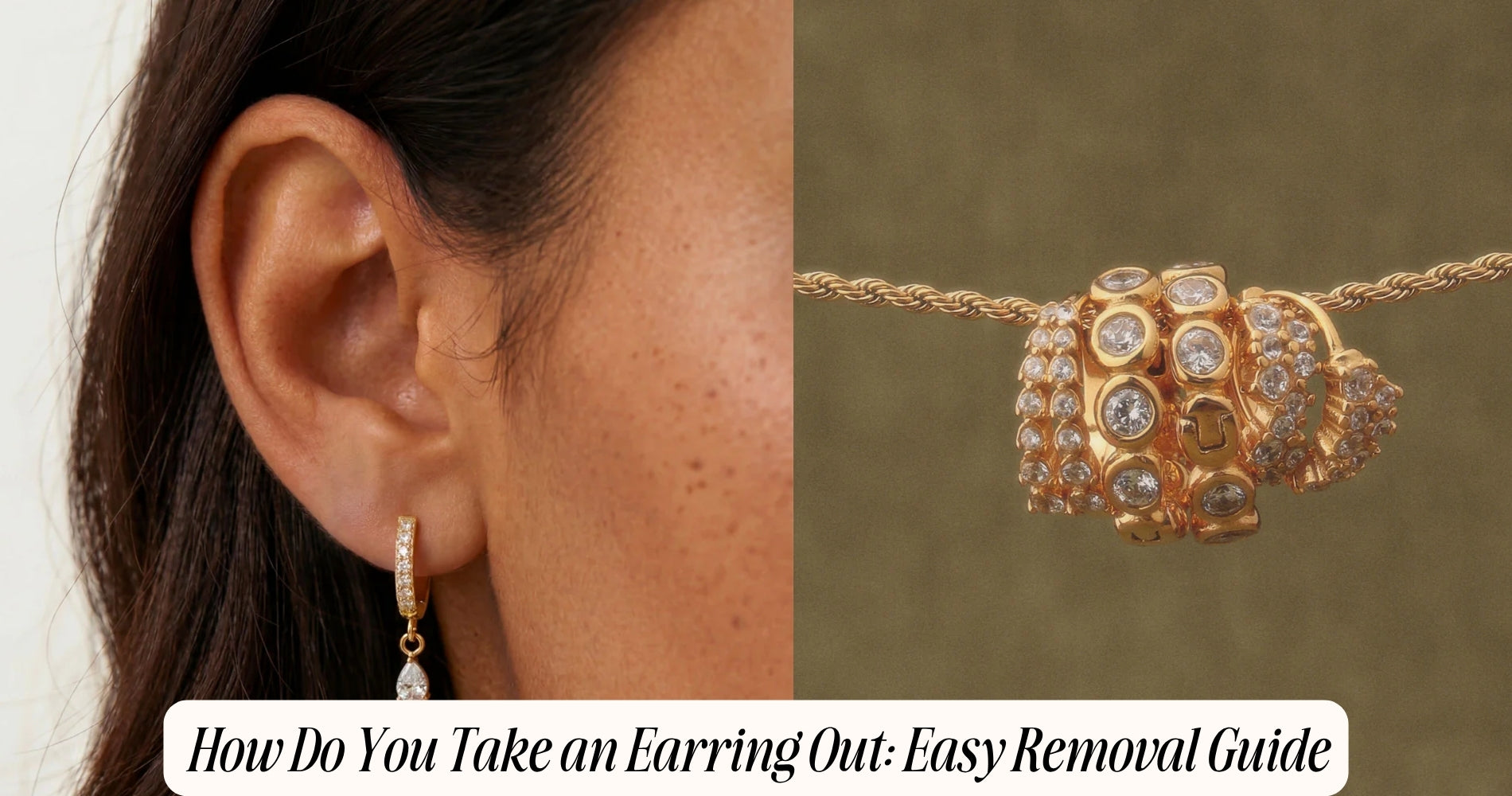
How Do You Take an Earring Out: Easy Removal Guide
Taking out an earring should be a quick, painless task, but anyone who has fought with a stuck backing or a swollen lobe knows it does not always go smoothly. Whether you are removing earrings before bed, switching styles, or dealing with a piercing that feels tender, knowing the right technique makes a real difference. If you often forget to take earrings out before showering or swimming, browsing a Waterproof Earrings collection can also save you from this problem altogether, since those styles are designed to stay in safely no matter what you are doing.
In this guide, we will walk through exactly how do you take an earring out for every common earring type, what to do if one gets stuck, and how to avoid irritation the next time you put a pair in.
Why Earring Removal Sometimes Feels Difficult
Most people assume removing an earring is as simple as putting it in, but a few common issues can make it harder than expected.
Swelling is one of the biggest culprits. If a piercing is new, irritated, or infected, the surrounding skin can swell around the post, making the backing feel tight. Dried lotion, hair product buildup, or dead skin around the earring can also cause the backing to seize up over time. In some cases, a backing simply gets over tightened and becomes hard to twist off with dry fingers.
Understanding the type of earring you are dealing with is the first step to removing it safely without hurting yourself or damaging the piercing.

How to Remove a Stud Earring
Stud earrings are the most common style, and they are usually the easiest to remove.
- Wash your hands thoroughly before touching your ear to avoid introducing bacteria into the piercing.
- Hold the front of the earring steady with one hand so it does not twist or pull on the piercing.
- With your other hand, grip the backing between your thumb and index finger.
- Gently pull the backing straight off the post, rather than twisting it, unless it is a screw back style.
- If it is a screw back earring, twist the backing counterclockwise slowly until it comes free.
If the backing feels stuck, avoid yanking it. Instead, move to the troubleshooting tips later in this guide.
How to Remove a Hoop Earring
Hoops come in a few different closures, and the removal method depends on which type you have.
Hinged hoops: These have a small clasp built into the hoop itself. Locate the hinge, press the small lever or clasp open with your fingernail, and gently swing the hoop open to slide it out.
Click top or press fit hoops: These usually have two ends, one thinner than the other, that snap together. To remove, gently pull the two ends apart at the point where they meet, then slide the hoop out of the piercing.
Continuous or seamless hoops: These have no clasp and rely on tension to stay closed. To remove, grip both sides near the opening and gently twist or pull apart just enough to slide the hoop free.

How to Remove a Dangle or Threader Earring
Dangle earrings with a standard post work the same way as studs, so use the same steps above. Threader earrings are a bit different, since the chain runs through the piercing rather than a solid post.
To remove a threader, gently pull the thin chain end through the piercing in the same direction it was inserted, moving slowly to avoid tugging on the ear. Rushing this step is one of the most common reasons threaders cause irritation, so take your time.
What to Do If an Earring Backing Is Stuck
A stuck backing is one of the most common reasons people search for how do you take an earring out in the first place. Here is how to handle it safely.
Soak the area first. Apply a warm, damp cloth to the earlobe for a few minutes. This loosens dried buildup and reduces swelling, which often makes the backing easier to move.
Use a saline rinse. A sterile saline solution can clean around the piercing and reduce irritation, especially if the backing feels tight due to inflammation.

Try a rubber grip. If your fingers keep slipping, a small piece of clean rubber, like a balloon or a rubber glove, gives better grip on a slippery backing without needing to squeeze too hard.
Avoid twisting metal backings that are not screw backs. Twisting a friction style backing can cause it to bind further onto the post. Straight, gentle pulling is usually safer for these styles.
Do not force it. If the backing still will not budge after a few gentle attempts, stop and give the area more time, or seek help from a professional piercer rather than risk damaging the piercing.
When to See a Professional
Most earrings can be removed safely at home, but there are times when it is better to get help. If the area around the piercing is significantly swollen, red, warm to the touch, or oozing, this may indicate an infection, and a professional piercer or doctor should assist with removal. Similarly, if a backing has become embedded in swollen tissue, a piercer has the right tools to remove it safely without tearing the skin.
It is always better to get help than to force a stuck earring and risk an injury or a worsened infection.
Tips to Prevent Future Removal Struggles
A few small habits can make future earring removal much easier.
Clean your earrings and piercings regularly to prevent buildup around the backing. Avoid applying lotion, perfume, or hairspray directly near your ears, since these products often contribute to backings sticking. Choose backings that are easy to grip, and avoid over tightening screw backs, since a snug fit is enough to keep an earring secure without making it difficult to remove later.
If you tend to forget to remove earrings before swimming or showering, choosing pieces made for constant wear, like a Waterproof Earrings set, can reduce how often you need to take them in and out, which in turn lowers the risk of irritation and stuck backings over time.

Final Thoughts
Knowing how do you take an earring out safely comes down to understanding your earring type, being gentle with new or sensitive piercings, and knowing when a stuck backing needs a little extra care rather than force. Most removals take only a few seconds once you know the right technique for studs, hoops, or threaders.
If stuck backings or irritation are a recurring issue, it may be worth rethinking the materials and styles you wear daily. Comfortable, well fitted earrings made from skin friendly materials are far less likely to cause the swelling or buildup that makes removal difficult in the first place.
Frequently Asked Questions
1. How do you take an earring out if the backing is stuck? Soak the area with a warm cloth to reduce swelling, clean around the post with a saline rinse, and gently pull the backing straight off rather than twisting it, unless it is a screw back style.
2. Why does my earring backing feel tight? Tightness is usually caused by swelling, dried lotion or product buildup, or an over tightened screw back. Cleaning the area and soaking it briefly often helps loosen things up.
3. Is it normal for a new piercing to be hard to remove? Yes, new piercings often swell slightly, which can make earrings feel snug. Be extra gentle and avoid forcing removal during the first few weeks of healing.
4. What should I do if my ear looks infected around the earring? If you notice redness, warmth, swelling, or discharge, avoid removing the earring yourself if possible and consult a professional piercer or doctor for safe removal and care.
5. Can I wear earrings in the shower to avoid removal altogether? Yes, as long as they are designed for it. A Waterproof Earrings collection is made specifically for showering, swimming, and daily wear, reducing how often you need to take earrings in and out.






コメントを書く
このサイトはhCaptchaによって保護されており、hCaptchaプライバシーポリシーおよび利用規約が適用されます。