


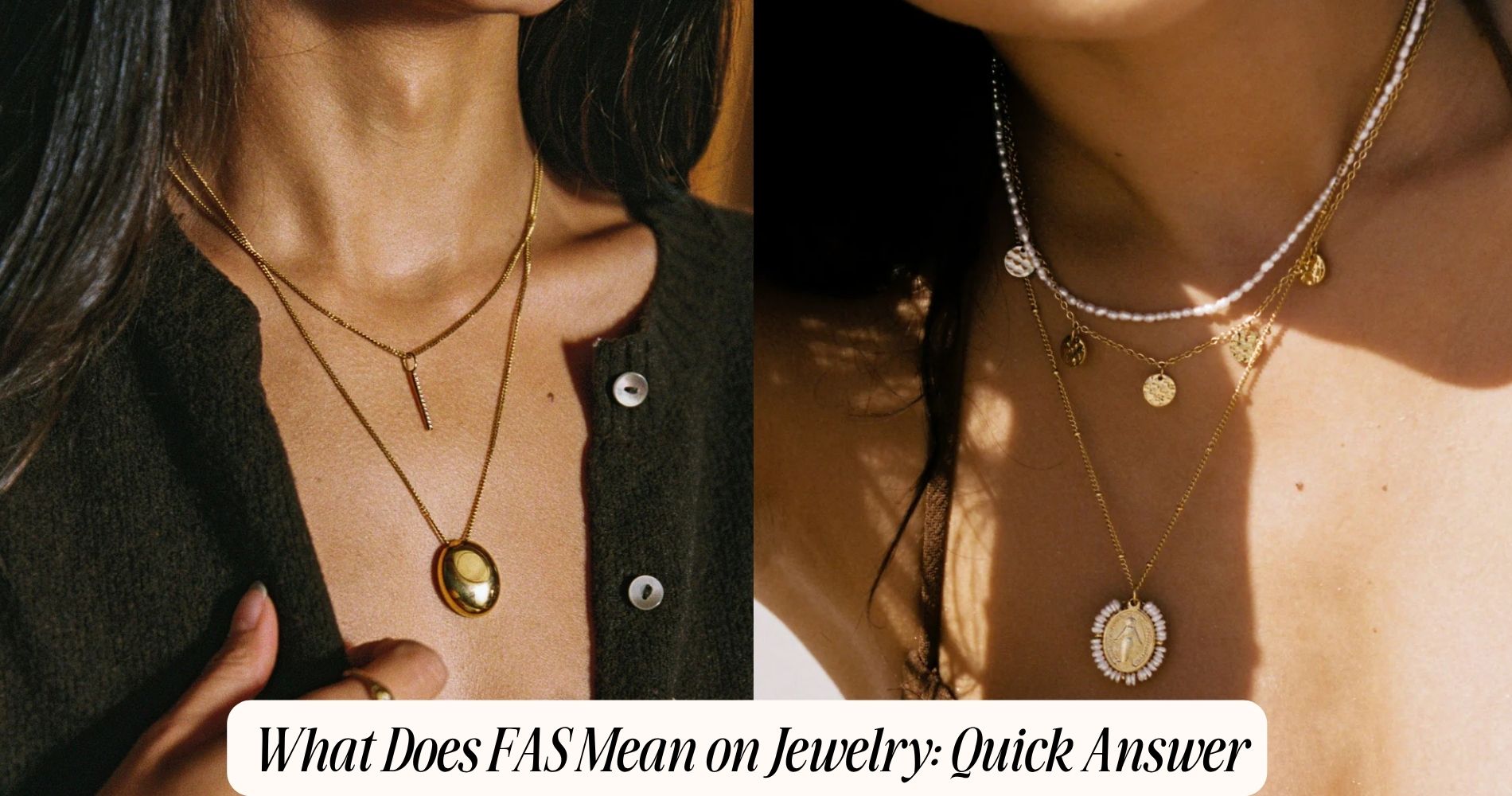
What Does FAS Mean on Jewelry: Quick Answer
What does FAS mean on jewelry? You’ll usually see FAS used to indicate a constructed piece with a base metal that has been filled or coated, rather than a mark of metal purity. It’s an industry-related stamp for identification, often found inside rings or on clasps alongside other markings. FAS is not a maker’s hallmark or a numeric purity indicator, so verifying the metal may require testing methods like acid tests or XRF. For more durable everyday options, pieces from the Waterproof Jewelry collection focus on performance and longevity beyond stamped markings.
Quick Answer: What FAS Usually Means on Jewelry
On jewelry, FAS most often stands for "filled and stamped," indicating a metal base that's been coated with a thin layer of precious metal and marked to show that treatment; you’ll interpret this as an industry designation denoting construction and marking practice.
You’ll assess FAS significance by noting coating thickness, substrate composition, and permanence of adhesion; these parameters determine wear resistance and value.
You’ll use FAS history to trace regulatory and manufacturing shifts—early electroplating evolved into modern mechanical and diffusion fills, prompting standardized stamping to inform consumers.
When you inspect a piece, verify stamp authenticity, surface continuity, and wear patterns under magnification. That systematic evaluation lets you distinguish legitimately filled-and-stamped items from plated or mis-marked goods with technical confidence.

Where You’ll Commonly Find FAS Marks (Rings, Clasps, Hallmarks)
Because manufacturers place FAS marks where durability and visibility are balanced, you'll most commonly find them on ring interiors, clasp backs, and near other hallmarks such as maker’s marks or metal-purity stamps.
Inspect ring styles with flat interior bands (comfort-fit, court, and signet) for clear FAS impressions; thin, hammered, or ornate gutters may obscure stamps.
On necklaces and bracelets, check clasp designs—lobster, spring-ring, box, and safety clasps—where the back face provides a protected, readable surface.
FAS also appears adjacent to hallmark variations on folded tags, jump rings, or discreet plates to preserve legibility.
As jewelry trends shift toward micro-stamping and minimalist profiles, you’ll still find FAS positioned to balance wear resistance, inspection accessibility, and compliance with assay standards.
Is FAS a Maker’s or Retailer’s Stamp?
One key question collectors ask is whether FAS denotes the maker or the retailer, and the answer is: usually neither exclusively.
You should treat FAS as a functional code whose stamp significance depends on context: manufacturing batch, supplier mark, or retailer identification in specific archives.
To determine the maker's identity you’ll need provenance, pattern comparison, serial databases, or documented correspondences; the FAS mark alone rarely establishes authorship.
Examine placement, typography, and accompanying marks (country marks, assay offices) to refine attribution.
In trade practice, some retailers applied supplier stamps for inventory control, while some workshops used the same code across subcontracted lines.

Does FAS Indicate Metal Purity or Plating?
Having treated FAS as a contextual identifier rather than a definitive maker or retailer stamp, you now need to assess whether it relates to metal purity or surface treatment.
You shouldn't assume FAS denotes purity: standard purity hallmarks (e.g., 925, 750) are regulatory and numeric, while FAS is alphanumeric and nonstandard.
To verify metal authenticity, you test: acid testing, XRF spectrometry, or documented assay reports.
If FAS accompanies a numeric hallmark, treat the numeric as the purity indicator and FAS as supplemental.
Regarding plating standards, FAS rarely signals coating thickness or process; plating uses terms like vermeil, gold-filled, or micron thickness (e.g., 2.5 µm).
In short, don't rely on FAS alone for metal authenticity or plating standards—confirm with tests or certified marks.
Does FAS Say Anything About Gemstones or Setting Quality?
Does FAS tell you anything about gemstones or setting quality? No — FAS marks pertain to metal composition or maker identification, not to gemstone clarity or setting durability. When you see FAS, don't infer gem grading, treatments, or mounting strength from that stamp.
You should evaluate gemstones and settings separately: assess gemstone clarity via standardized gemological criteria (inclusions, transparency, and light performance) and check setting durability by inspecting prongs, bezel integrity, solder joints, and metal hardness.
Use magnification and torque/resilience tests performed by a qualified jeweler for objective assessment. Documentation like gem reports or repair records is necessary to verify gemstone attributes and setting condition; the FAS mark alone provides no reliable information about either.
How to Authenticate an FAS Mark: DIY Checks and Professional Tests
Since the FAS stamp doesn't speak to gems or mounting, you'll need to confirm the mark itself before relying on it for metal verification. Inspect hallmark placement, font sharpness, and wear patterns under a loupe; inconsistent engraving suggests aftermarket stamping.
Use magnet and acid tests as basic authentication methods: non-magnetic behavior plus proper acid reactions narrow metal type but carry limitations and hazards.
Employ specific testing techniques—electrical conductivity probes or XRF analyzers—for non-destructive metal ID; they quantify alloy composition and verify claimed purity.
For stones, separate gem testing is independent of the FAS mark. When results conflict or value is significant, send the piece to a certified lab or appraiser; request a detailed report citing methods, calibration, and uncertainty so you can rely on the authenticated conclusion.

Will FAS Affect Price, Resale Value, or How You Care for the Piece?
How will an FAS stamp influence price, resale value, and care? You’ll see limited direct FAS impact on raw market price unless the mark signals recognized quality or brand provenance.
FAS valuation is contextual: buyers pay premiums when the stamp corroborates metal purity, designer attribution, or historical authenticity.
For resale, document the FAS mark with photos and assay reports to support provenance and minimize depreciation.
Care requirements remain dictated by metal and gemstones, not the stamp; follow standard maintenance—proper storage, occasional professional cleaning, and avoiding harsh chemicals.
However, when FAS valuation raises insured value, you’ll need updated appraisals and possibly higher insurance coverage.
In short, FAS can affect perceived value and paperwork needs, but not physical maintenance routines.
Frequently Asked Questions
Is FAS Connected to a Specific Country of Origin?
No — FAS isn’t tied to a specific country of origin. You’ll evaluate FAS history and FAS significance through maker records, assay databases, and stylistic cues; provenance research and technical testing confirm origin when markings aren’t definitive.
Can FAS Be Registered as an Official Trademark?
Yes — you can register FAS as a trademark if it’s distinctive and complies with FAS regulations; you’ll need to document FAS history, prove non-descriptiveness, and navigate USPTO or local trademark office examination and opposition processes.
Do Vintage Pieces Use FAS Differently Than Modern Jewelry?
Yes — you’ll see FAS used differently: vintage craftsmanship marks often indicate maker/quality specifics and hand-finishing, while modern trends apply standardized trademarks or production codes, reflecting mass manufacturing, branding, and regulatory compliance.
Are There Known Counterfeiters Using FAS Stamps?
Yes — counterfeiters have forged FAS stamps; you should verify FAS origins and assess FAS value via assay reports, provenance, metallurgical testing, and reputable appraisers to detect inconsistencies and protect your investment.
Does FAS Relate to Ethical Sourcing or Conflict-Free Materials?
No, FAS doesn't inherently indicate ethical implications or sourcing standards; you shouldn't assume conflict-free or responsibly sourced materials from that mark alone, so you’ll need additional documentation, chain-of-custody records, or supplier certifications to verify.
Conclusion
In short, FAS stamped on jewelry most often identifies a maker, retailer, or internal code rather than metal purity or gemstone quality. You shouldn’t assume alloy content or plating from that mark alone; verify with acid tests, XRF, or a trusted jeweler. FAS can influence provenance and desirability but not intrinsic value unless tied to a notable maker. Treat the piece per confirmed metal and gemstone findings to preserve condition and resale value.






Leave a comment
This site is protected by hCaptcha and the hCaptcha Privacy Policy and Terms of Service apply.