


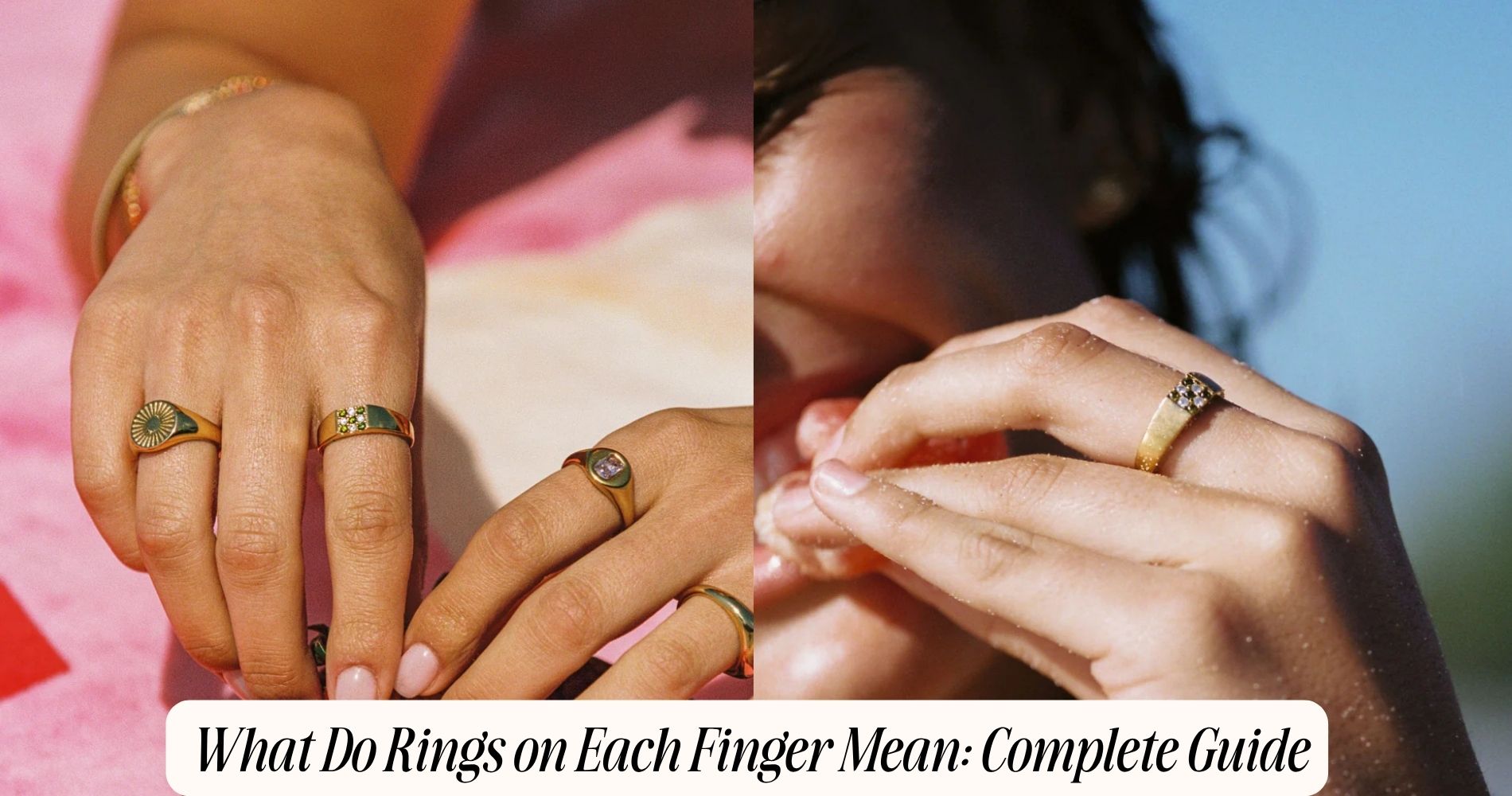
What Do Rings on Each Finger Mean: Complete Guide
What do rings on each finger mean? You can use rings to express identity, intention, and style through placement. Thumb rings often symbolize independence, index rings suggest confidence or leadership, middle rings emphasize balance and visibility, while the fourth finger is traditionally linked to engagement or marriage. Pinky rings may represent communication, status, or personal flair. Meanings can vary across cultures and traditions, so comfort, material, and context all matter when choosing a ring. Durable styles like those in the Waterproof Rings collection make everyday wear both practical and expressive. Keep reading to explore the full cultural, historical, and stylistic meanings behind each finger.
Quick Reference: What Each Finger Means
Think of each finger as a distinct signal: the thumb conveys will and action, the index denotes authority and direction, the middle finger reflects balance and responsibility, the ring finger signals partnership and commitment, and the little finger communicates communication and finesse.
You assess ring placement by function: thumb rings emphasize autonomy and assertiveness; index rings project leadership or affiliation; middle rings indicate equilibrium and duty; ring rings denote marriage, engagement, or symbolic bonds with noted historical significance; pinky rings suggest diplomacy, secret societies, or refined personal style.
Read placement alongside metal, stone, and wear pattern to quantify intent. Measure finger choice against context—profession, gesture habits, and cultural cues—so your interpretation stays empirical rather than assumptive.

Cultural & Religious Variations in Ring Placement
While ring placement often follows personal preference, cultural and religious systems prescribe specific fingers to convey legally and spiritually binding meanings. Therefore, you should read placements through those frameworks first.
You’ll note cultural significance in marriage bands: many Western systems use the left fourth finger; Eastern Orthodox and some European regional practices shift it to the right.
Religious symbolism appears in clergy rings, purity rings, and sacramental tokens, each tied to doctrinal intent. Historical traditions inform gendered placement and inheritance markers.
Regional practices dictate engagement, mourning, or authority signaling. You should weigh personal beliefs against societal norms when interpreting another’s ring.
Accurate reading requires context: ask about origin, community rules, and any documented ceremonial usage before drawing conclusions.
Thumb Rings: Meaning & Symbolism
A thumb ring signals distinct functions and identities across cultures, combining practical use, status display, and symbolic intent you can read through form and context.
You interpret thumb rings through measurable attributes: width, material density, ornamentation, and placement on the proximal thumb segment. Historically utilitarian thumb rings protected archers' thumbs; today they connote authority, independence, or nonconformity depending on cultural coding.
In analysing thumb symbolism, note the thumb’s anatomical role—opposition and grip—so rings emphasize agency and control.
In thumb fashion, designers exploit scale and texture to balance ergonomics with visual weight; adjustable bands and tapered profiles preserve dexterity.
When you choose a thumb ring, assess tactile comfort, symbolic resonance, and how its geometric language communicates intention in specific social contexts.

Index Finger Rings: Meaning & History
Shifting focus from the thumb’s association with grip and authority, the index finger has historically served as the primary site for rhetorical, judicial, and heraldic display.
So rings here communicate proclamation and rank. You’ll note the historical significance in legal seals, signet rings, and insignia worn by magistrates and clergy; these implements transmitted identity and validated documents.
Functionally, an index-ring’s position optimizes visibility and dexterity for sealing, pointing, and display, so material choice and engraving are deliberate.
Contemporary symbolic interpretations retain registers of leadership, assertiveness, and affiliation—fraternal or professional.
When you select or interpret an index ring, assess provenance, emblematic motifs, and wear patterns to determine authority, social coding, and intentional signaling.
Middle Finger Rings: Meaning & Statements
Because the middle finger occupies the central axis of the hand, wearing a ring there alters balance, visibility, and conveyed intent. So you should read such jewelry as a deliberate statement rather than mere decoration.
You’ll notice its position maximizes visual salience and mechanical symmetry; a central ring shifts perceived hand geometry and draws attention during gesture phases. Functionally, middle finger rings register intent without denoting relational status, so they’re often chosen for fashion statement impact or calibrated personal expression.
Material, mass, and profile influence tactile feedback and wearer comfort, while motif and finish communicate tone—from minimalist authority to ornate defiance.
When you select a middle-finger piece, assess proportionality, ergonomic interference, and semiotic alignment with the image you want to project.
Ring Finger: Engagement, Marriage, and Other Meanings
Moving from the middle finger’s visual and mechanical signaling, the ring finger occupies a different communicative and functional niche: in many cultures it serves as the canonical site for engagement and marriage rings, linking dermatological, anatomical, and symbolic factors.
You’ll note its venous myth: the "vena amoris" historically justified placement yet anatomical variability undermines universal physiological claims. Practically, its relative immobility and adjacent digits provide secure seating for bands and settings.
In sociocultural terms, engagement symbolism and marriage customs converge there to signal contractual status, commitment, and lineage. Wear patterns encode emotional significance—position, metal, and ornamentation yield readable cues.
Simultaneously, you use the ring finger for personal expression; bespoke choices modulate public information while preserving intimate meaning.

Pinky Rings: Meaning, Status, and Modern Uses
Although small in scale, the pinky ring carries outsized signals about status, profession, and personal style, so you should read it as both an aesthetic choice and a semiotic device.
You’ll notice pinky ring symbolism operates on multiple registers: family crests signal lineage, signet faces authorize documents, and simple bands index stylistic intent.
In professional contexts, a pinky ring can denote legal membership or technical affiliation without verbal explanation. As a fashion statement, it offers lateral balance to hand composition and emphasizes gesture dynamics.
You should calibrate metal, weight, and engraving to the communicative function you want—visibility, discretion, or utility.
Contemporary use favors minimal profiles and mixed metals, letting the pinky ring perform as both identifier and accessory.
How to Choose a Finger: Meaning, Style, and Fit (Plus Multiple-Ring Rules)
Which finger you choose communicates intent as much as it meets fit and style—so decide deliberately. You evaluate finger choice by meaning, ergonomics, and aesthetics: index conveys leadership, middle offers balance, ring signals partnership, pinky suggests distinction, thumb denotes autonomy.
Match that semantic load to your style preferences and daily tasks. Measure circumference, account for knuckle variance, and plan fit adjustments seasonally; metals expand with heat, bands compress with activity.
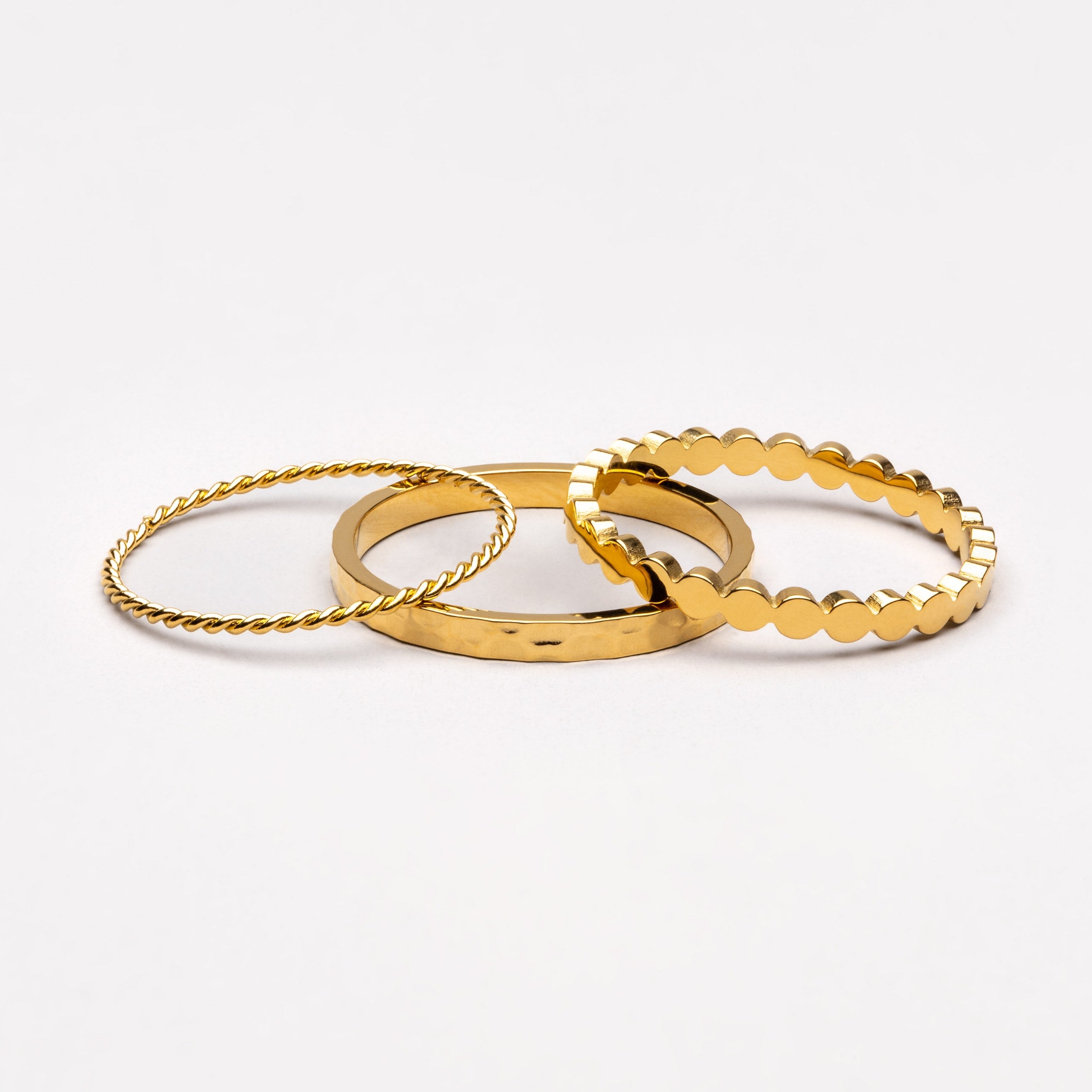
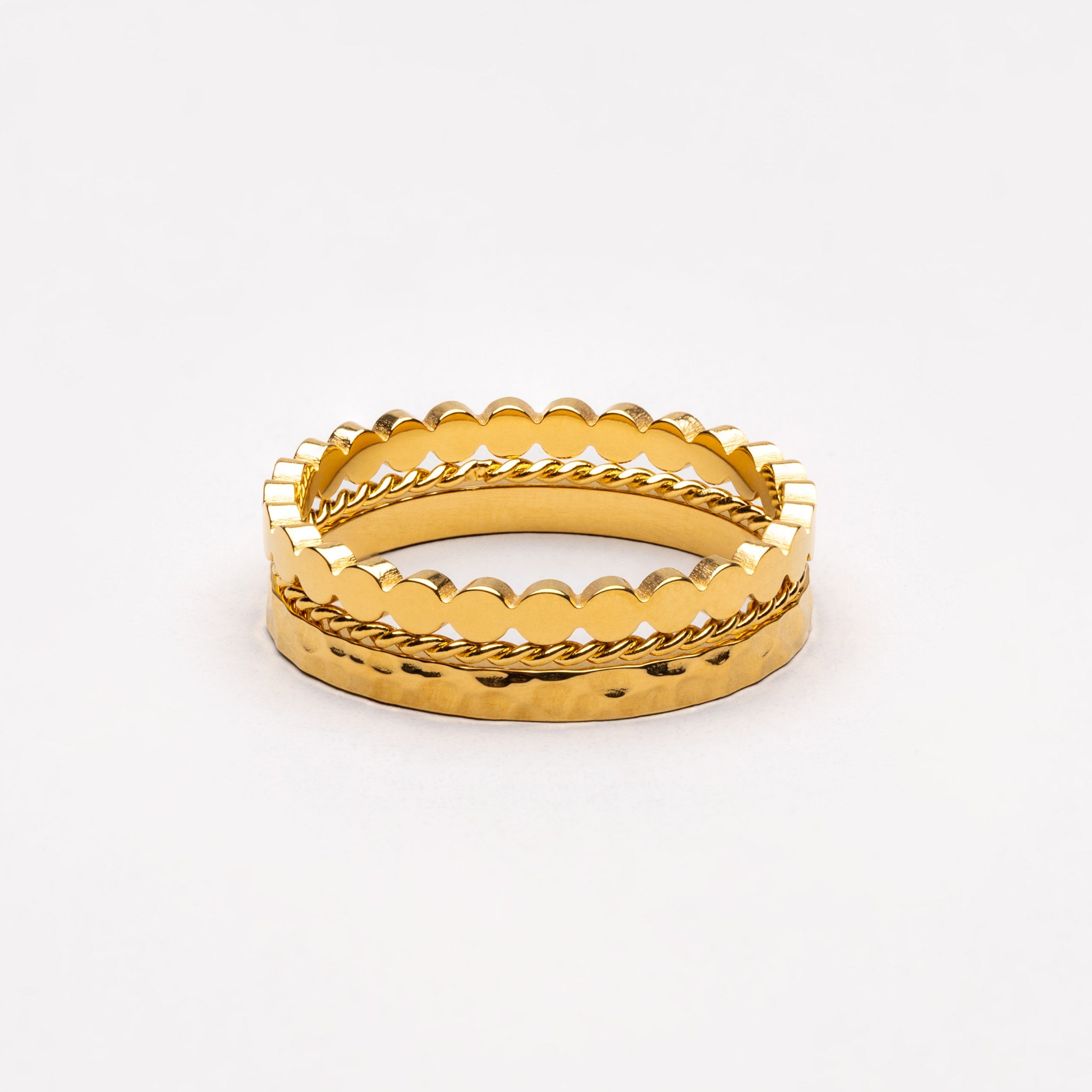
When wearing multiple rings, allocate visual weight—avoid stacked pieces that impede motion or overlap proximal joints. Prioritize one statement piece per hand and complementary accent rings on adjacent fingers.
Test during typical motions to confirm comfort, alignment, and unintended contact. Choose intent first, then refine size and composition for functional coherence.
Frequently Asked Questions
Can Ring Finger Wearing Affect Finger Circulation or Nerve Health?
Yes — wearing a tight ring can impair finger health by restricting circulation effects and compressing tissues, potentially compromising nerve function; different ring styles alter pressure distribution, so you should monitor swelling, numbness, and seek prompt removal.
Do Ring Meanings Change With Ring Metal or Gemstones?
Yes — you’ll interpret ring meanings differently because metal symbolism and gemstone significance alter perceived intent; you’ll note technical associations (gold = status, silver = practicality; diamond = permanence, opal = emotion), changing cultural and personal readings.
How Do Couples Choose Nontraditional Fingers for Commitment Rings?
You choose nontraditional fingers by weighing practical fit, symbolism, and visibility; you’ll document alternative commitment symbols, consult cultural ring practices, test ergonomics, and align shared meanings to guarantee durability, comfort, and mutual recognition.
Are There Etiquette Rules for Removing Rings in Social Settings?
Yes—you should. You’ll follow social norms and respect cultural significance: remove rings for hygiene, safety, or etiquette (dining, medical settings, sports), announce removal when appropriate, and store them securely to prevent loss or offense.
Can Children's Ring-Wearing Convey Symbolic Meanings Like Adults'?
Yes — children's ring-wearing can convey meanings: you'll observe children's preferences shaping symbolic use, while cultural significance and family traditions inform choices; you'll interpret gestures technically, noting developmental, symbolic, and social-contextual variables.
Conclusion
You’ve now got a concise map of what rings on each finger typically signify across cultures and contexts. Use this to align symbolism, social signals, and personal aesthetics when choosing placement. Prioritize fit, comfort, and cultural sensitivity; test multiple-ring arrangements for balance and mobility. Remember thumb and pinky choices often signal individuality or status, while index, middle, and ring placements convey authority, identity, or marital status. Apply these rules adaptively to suit your intent.






Leave a comment
This site is protected by hCaptcha and the hCaptcha Privacy Policy and Terms of Service apply.