



How to Clean Gold Chain Necklace: Proven Cleaning Tips
A dull gold chain is almost never damaged - it's dirty. The film that builds up from skin oils, lotion, sunscreen, and sweat sits between the links and on the surface, blocking the reflectivity that makes gold look the way it should.
Knowing how to clean gold chain necklace correctly restores that finish without stripping it. The method that works depends almost entirely on what your chain is actually made of - solid gold, gold-plated, or PVD-coated stainless steel each respond differently to the same cleaning approach, and using the wrong one can do more harm than the buildup it's trying to remove. The Waterproof Necklaces collection covers chains built to resist buildup at the source - but for everything else, this guide gives you the right method for your specific finish.
Know Your Finish Before You Clean
The most important cleaning decision you'll make is matching the method to the metal. Treating a gold-plated chain the same way you'd treat a solid gold one is the fastest way to accelerate the exact wear you're trying to prevent.
| Chain Type | Base Metal | Gold Layer Thickness | Cleaning Sensitivity |
|---|---|---|---|
| Solid gold (10k–18k) | Gold alloy throughout | No plating - solid | Low - most methods safe |
| Gold vermeil | Sterling silver | 2.5 microns minimum | Medium - gentle pressure only |
| Gold-plated | Brass or copper | 0.5 microns or less | High - avoid abrasives, heat, alcohol |
| Gold-filled | Brass | 5% gold by weight, bonded | Medium-low - durable but not abrasion-proof |
| PVD-coated stainless steel | Stainless steel | Molecular bond, ~5+ microns | Very low - most resistant to cleaning agents |

The Standard Cleaning Method: Warm Water and Dish Soap
For solid gold, gold-filled, and gold-vermeil chains - and for most gold-plated chains cleaned with appropriate care - warm water with a small amount of mild dish soap is the method that works consistently and safely.
What you need:
- A small bowl
- Warm water (not hot - high heat can affect plating and loosen prong settings on chains with pendants)
- 2-3 drops of mild dish soap (unscented, no moisturizers, no antibacterial additives)
- A soft-bristled toothbrush or a dedicated jewelry brush
- A lint-free cloth or microfibre towel
Step 1: Soak. Fill the bowl with warm water and add the dish soap. Place the chain in the solution and let it sit for 10-15 minutes. This loosens oils and buildup in the links without requiring you to scrub - soaking does most of the work.
Step 2: Brush the links. For solid gold and gold-filled chains, use the toothbrush to work along the links with light circular strokes. The clasp area and the section of chain that rests at the back of the neck (which accumulates the most contact with skin and hair products) deserve particular attention. For gold-plated chains, use the softest brush you have and the lightest pressure - or skip the brush entirely and use your fingertips.
Step 3: Rinse thoroughly. Hold the chain under lukewarm running water until all soap residue is gone. Leftover soap dries on the surface and leaves a film - the opposite of what you're trying to achieve.
Step 4: Dry completely. Pat dry with a lint-free cloth and let the chain air-dry on a flat surface before storing or wearing. Trapped moisture inside links - particularly in rope or herringbone chains where surfaces sit close together - can accelerate tarnishing on gold-plated pieces.

How Chain Style Affects Cleaning
Chain construction determines where buildup collects and how difficult it is to reach. One cleaning method doesn't apply uniformly across every chain style.
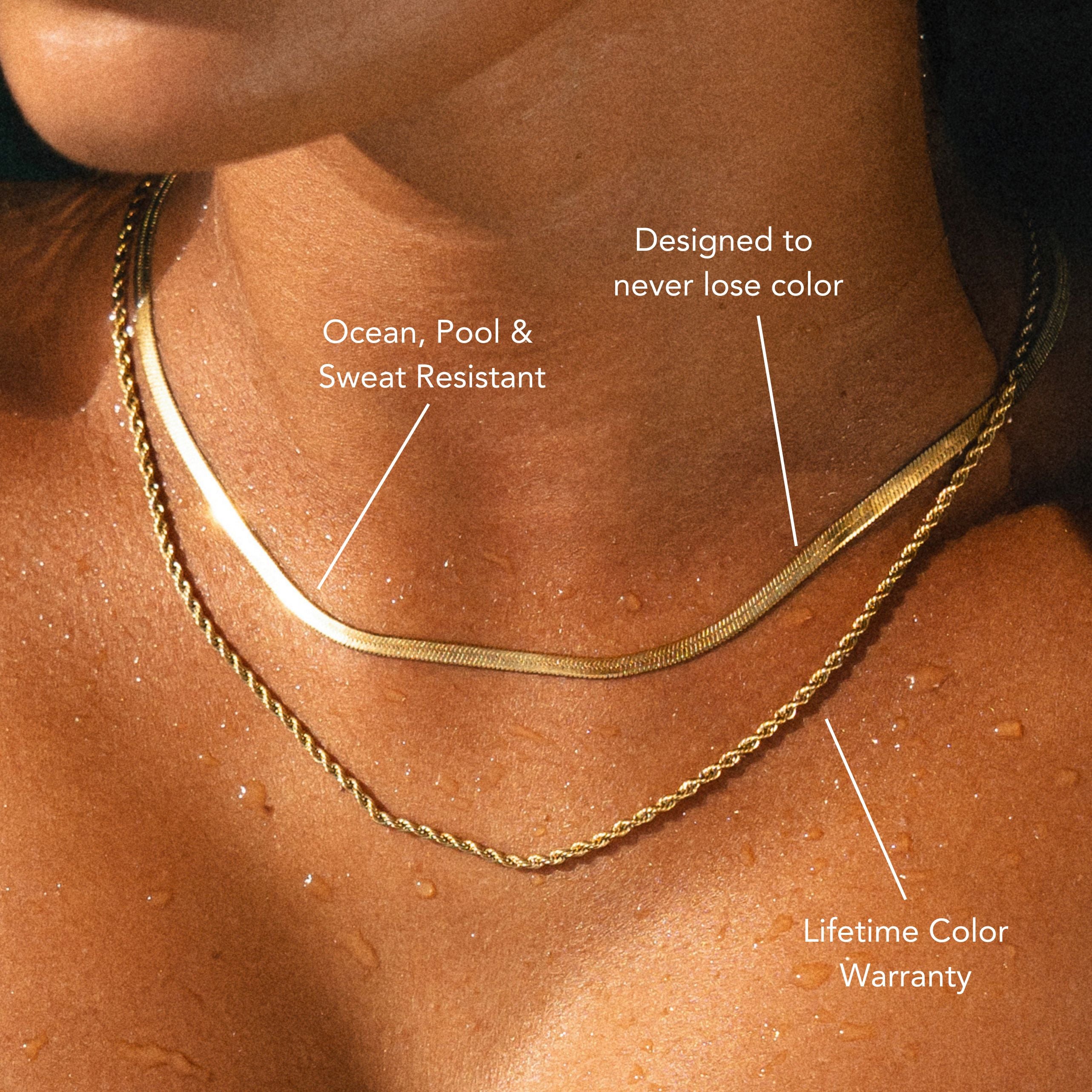
- Rope chains twist multiple metal strands together, creating gaps where oils and product residue accumulate between the twisted sections. A longer soak (15–20 minutes) works better than scrubbing here, because the brush can't reach the interior of the twist. After soaking, rinse thoroughly and hang vertically to dry so water doesn't sit in the links.
- Cable and box chains have open link structures where buildup is easier to see and easier to remove. A soft toothbrush reaches the inside of each link without difficulty. These are the most straightforward chains to clean.
- Herringbone chains are flat and tightly constructed - the V-shaped segments lie flush against each other with almost no gap between them. A soft cloth works better than a brush here: brush bristles can catch on the segments and cause the chain to kink. Wipe the surface gently in one direction, not back and forth.
- Figaro chains combine short and long links with relatively accessible surfaces. Clean them the same way as cable chains, with particular attention to the transition points between different link sizes.
- Chains with pendants or stones: Remove the pendant if possible before soaking, or confirm the stone is water-safe. Porous stones (turquoise, malachite, opal) absorb water and cleaning solutions. Organic materials (pearl, coral, amber) can be permanently damaged by soap solutions. For necklaces with these elements, clean only the chain with a damp cloth rather than submerging the whole piece.
What Not to Use and Why
Most cleaning damage comes from well-intentioned methods that work on some surfaces and destroy others. Understanding why these substances cause harm helps you avoid them without needing to memorize a list.
- Toothpaste: Commonly suggested, consistently damaging to plated chains. Most toothpaste contains silica as a mild abrasive - fine enough to feel smooth on teeth, abrasive enough to scratch the microscopic gold layer on a plated chain. Solid gold can tolerate occasional toothpaste use; plated gold cannot.
- Baking soda paste: The same problem as toothpaste at higher intensity. Baking soda is a more aggressive abrasive than most people realize. It strips plating faster than daily wear does, particularly when scrubbed with a brush. Reserve it for solid gold chains only, and even then, dilute it heavily.
- Rubbing alcohol or acetone: Alcohol dissolves the adhesive compounds sometimes used in gold-plated finishes and accelerates breakdown of the plating layer. Acetone (found in nail polish remover) is more aggressive still - it will strip the finish on a plated chain after a single application in some cases.

Frequently Asked Questions
How often should I clean my gold chain necklace?
For daily-wear chains, a quick wipe with a soft cloth after each use is enough for routine maintenance. A full soap-and-water cleaning every 2–4 weeks handles deeper buildup from skin oils and product residue. If you wear your chain less frequently, clean it before storing and again before wearing after a gap. Gold-plated chains benefit from more frequent gentle wiping and less frequent full cleaning - every scrub removes a small amount of finish.
Can I clean a gold chain necklace with toothpaste?
On solid gold (10k-18k), occasional toothpaste cleaning is tolerated but not ideal - the abrasive particles cause microscopic scratching over time. On gold-plated chains, toothpaste strips the plating faster than almost any other common household cleaning method. Warm soapy water is safer for every finish type and produces comparable results without the abrasion risk.
How do I clean a gold chain necklace that has turned dark?
Darkness on a gold chain is usually buildup - oils, lotion residue, and dead skin cells that have accumulated in the links and oxidized. A 15-20 minute soak in warm, mild soapy water followed by gentle brushing (for solid gold) or soft cloth wiping (for plated gold) removes most discoloration. If the chain has turned a greenish or copper color at the links, the base metal is showing through worn plating - cleaning won't restore the gold layer, and replating or replacement is the only fix.
How do I untangle a gold chain before cleaning?
Lay the chain flat on a smooth surface. Apply one small drop of baby oil or olive oil to the knot - not to dissolve it, but to reduce friction between the links so they can be teased apart. Use two straight pins or a pair of fine-pointed tweezers to work from the outside of the knot inward, loosening the outermost loops first. Once untangled, clean the chain with warm soapy water to remove the oil completely before wearing or storing.
Conclusion
The difference between a gold chain that looks good for years and one that dulls within months is rarely about quality alone - it's about matching the care routine to the finish. How to clean gold chain necklace correctly means using the gentlest effective method for your specific chain type, giving the links time to soak rather than scrubbing, and building a few prevention habits that reduce how often a full clean is necessary. The necklace range covers styles that take the maintenance question off the table entirely - but for every chain you wear, the right cleaning approach is simpler than most guides make it.












Leave a comment
This site is protected by hCaptcha and the hCaptcha Privacy Policy and Terms of Service apply.