


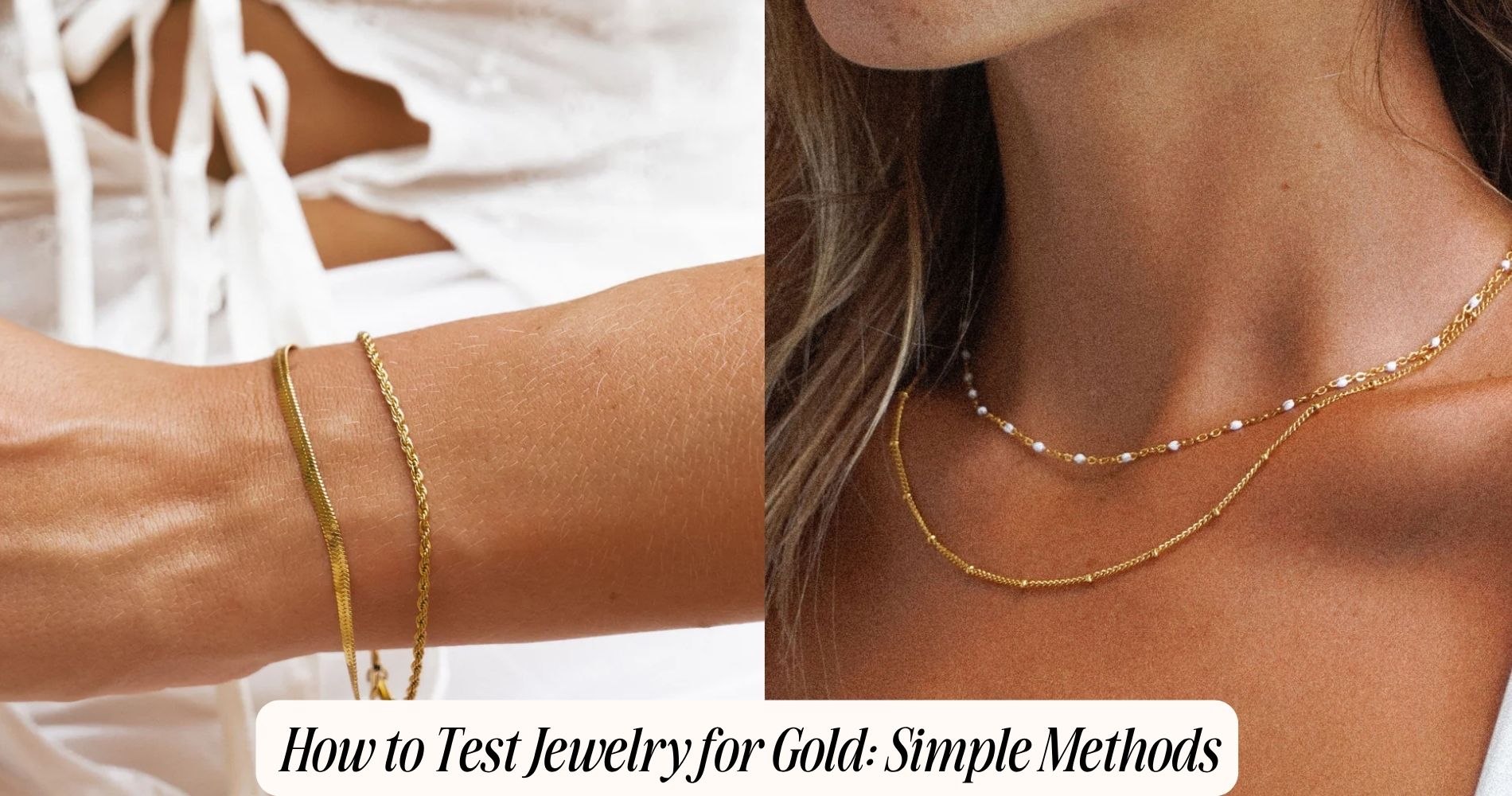
How to Test Jewelry for Gold: Simple Methods
How do you test jewelry for gold? You can start by checking hallmarks with a loupe and bright lighting, looking for stamps like 750 or 585 and consistent coloring throughout the piece. A neodymium magnet can help identify magnetic base metals, while weighing the item and calculating density offers more accuracy. Simple at-home methods like vinegar, ceramic streak, or nitric-acid spot tests may also help confirm authenticity. For reliable everyday pieces, collections like Everyday Gold Jewelry focus on durable materials and classic gold-inspired style. Continue reading to explore troubleshooting tips and more advanced testing methods.
How to Test Gold at Home: Quick 3-Step Checklist
Before you spend money on lab tests, run this quick 3-step checklist at home to verify whether an item is likely gold: inspect for hallmarks and wear, perform a magnet and density check, then do a mild acid or jeweler’s stone test if needed.
Start by examining gold color consistency and edge wear under bright light and loupe; note plating signs and residue.
Next, use a strong magnet—real gold isn't magnetic—and measure mass and volume to compute density (approx. 19.3 g/cm³ for 24K); compare against expected alloy densities for accuracy.
Finally, apply a drop of nitric or mild acid on an inconspicuous area or stroke on a jeweler’s stone, watching reaction and streak color.
Adhere to jewelry care: clean before tests and neutralize acids afterward.
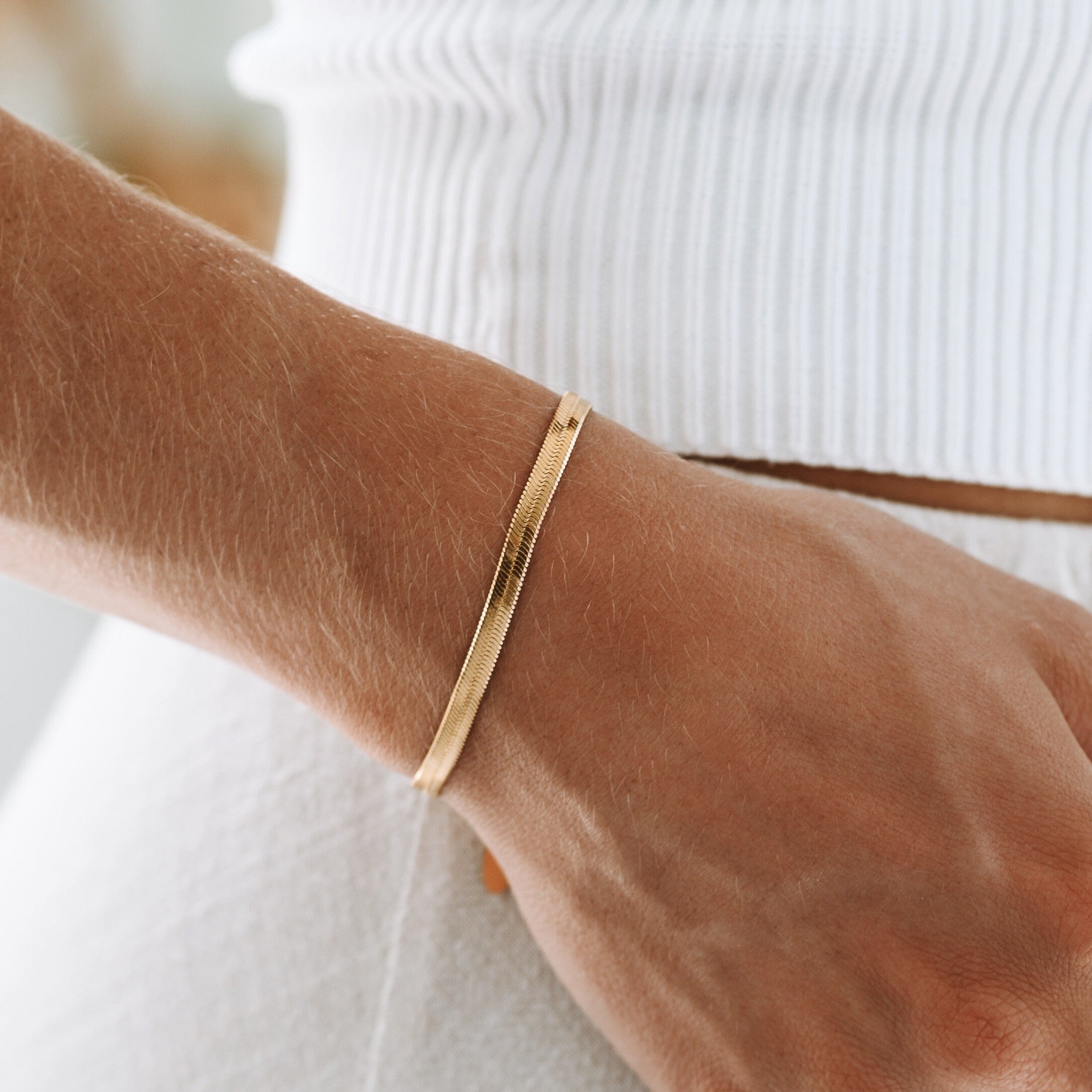
Read Hallmarks and Other Visual Signs
When you inspect a piece for hallmarks and visual cues, work methodically under bright light and, if available, a 10x loupe to pick out tiny stamps, surface wear, and plating lines.
Examine any hallmark symbols—numeric stamps (e.g., 750, 585), fineness marks (e.g., 18K, 14K), and country or maker marks—then cross-reference with known standards to infer gold purity.
Look for inconsistent stamps, shallow engraving, or signs of re-stamping that suggest plating or repair. Check edges, clasp interiors, and jump rings where wear exposes base metal.
Note color variation: true gold has uniform hue across joint areas, while plated items reveal a different substrate at rubbed spots.
Record findings; hallmarks are indicative but not definitive without chemical or density confirmation.
Do a Magnet Check and (Advanced) Density Test
Start by using a strong magnet to check for obvious non-gold alloys. Then, if you need greater certainty, perform a simple density calculation to estimate purity.
Hold the magnet near the piece; genuine gold is non-magnetic, so any strong attraction indicates ferrous or magnetic fillers. Note magnet strength—use a neodymium magnet for reliable detection. Clean the item first; surface dust can mask weak attraction.
For the density calculation, measure mass with a precise scale and determine displaced water volume to get volume.
Density = mass / volume. Compare the result to standard gold densities (19.32 g/cm³ for 24K, lower for alloys). Account for hollow parts, attached non-gold components, and measurement error when interpreting results.

Try Household Tests: Vinegar, Salt, and Ceramic
If you want quick, low-cost checks for suspect gold, try a few household methods—vinegar, salt, and an unglazed ceramic tile—knowing they’re qualitative and can’t replace professional assays.
For vinegar reaction, submerge a small, inconspicuous area in white vinegar for a minute; real gold shows no change, while base metals or gold-plated items may discolor or produce bubbling.
For a salt test, dissolve table salt on a cotton swab with a drop of vinegar and rub a discreet spot; persistent residue or color change suggests non-gold alloys or plating.
For a ceramic scratch, gently drag the piece across an unglazed ceramic surface; true gold leaves a gold-colored streak, while non-gold leaves black or gray marks.
Record observations; follow up with lab testing if uncertain.
Do a Safe Nitric (Acid) Test and Read Results
Before you touch acid, prepare a well-ventilated workspace, wear chemical-resistant gloves and eye protection, and have baking soda or a neutering agent and plenty of water on hand to neutralize spills; nitric testing involves concentrated acid that can damage metal, skin, and finishes.
For nitric acid safety, work small and use a plastic dropper, glass tile or stone test surface, and a magnet to remove nonferrous attachments.
Clean the item, scratch a discreet spot to expose base metal, and apply a 10–20% nitric solution in drops following testing procedures.
Observe immediate color changes: no reaction or faint milky film suggests high-karat gold; green or blue indicates base metals or plated items.
Neutralize spills immediately and dispose of waste per local regulations.
Troubleshoot Conflicting Results and When to Get a Professional
When test results conflict, you’ll need a systematic approach to isolate causes: document each observation, note testing tools, and repeat tests under controlled conditions.
Start by verifying calibration and condition of testing tools—magnet, loupe, acid bottles, electronic tester—and confirm test locations on the piece to avoid plated areas.
Review common mistakes: misreading streak color, using diluted acids, testing over solder seams, and ignoring surface treatments.
If repeated, consistent discrepancies persist, capture photos and detailed notes.
Seek a professional appraisal when provenance, insurance, resale, or legal matters depend on accurate gold valuation, or when tests risk damage.
A qualified appraiser or assay lab will use XRF or fire assay and provide certified results you can trust.

Frequently Asked Questions
Can Wearing Gold Cause Allergic Reactions or Skin Discoloration?
Yes—you can get allergic reactions or skin discoloration from gold jewelry; allergy symptoms include itching, redness, swelling, rash, and blistering, especially if you have metal skin sensitivity or if alloys like nickel contaminate the gold.
How Is Gold Recycling Different From Testing Old Jewelry?
Gold recycling focuses on recovering metals via refined recycling process and evaluating gold purity for re-melting and refining, while testing old jewelry assesses composition and karat quickly for identification, resale, or minor repair decisions.
Can Plating Thickness Be Measured at Home?
Yes—you can measure plating thickness at home using plating measurement tools like magnetic or electronic thickness gauges; simpler at home techniques include calibrated calipers with substrate subtraction and DIY eddy-current probes, though professional meters give best accuracy.
Do Insurance Appraisals Require Specific Documentation?
Yes — insurers usually require specific documentation: a written appraisal detailing appraisal requirements, item descriptions, photos, provenance, and stated insurance values; you should get a certified appraiser’s signature, date, and method explanations to validate coverage.
Are Gold Tests Valid for Coins and Bullion?
Yes — you can test coins and bullion; credible results depend on appropriate gold purity testing methods like XRF, fire assay, or ultrasonic analysis, and you’ll need proper sampling, calibration, and documentation to guarantee accuracy and legality.
Conclusion
You’ve now got a concise checklist to evaluate gold: inspect hallmarks and color, use a magnet and optional density calculation, try household vinegar, salt, or ceramic tests for quick clues, then perform a controlled nitric acid test if needed. When results conflict or value is significant, stop and consult a professional assayer or jeweler. Follow safety protocols for acids and sharp tools, document findings, and rely on certified testing for definitive valuation.











Leave a comment
This site is protected by hCaptcha and the hCaptcha Privacy Policy and Terms of Service apply.